

A wise turn in health policy: Why putting nutrition at the heart of MahamaCare deserves national applause
Feature Article
 President John Mahama
President John Dramani Mahama’s launch of Ghana’s Free Primary Healthcare programme in Dodowa already marks an important shift towards prevention, equity and universal health coverage.
If structured nutrition education is to be embedded as a core pillar of that agenda, then Ghana may be witnessing one of the most consequential health policy signals in years.
There are moments in public policy when a single decision reveals whether a nation is content to keep paying for illness or is finally prepared to invest in health.
The launch of Ghana’s Free Primary Healthcare programme by President John Dramani Mahama at the Shai Osudoku District Hospital in Dodowa is one such moment.
Publicly positioned as complementary to the National Health Insurance Scheme and as part of Ghana’s wider push towards universal health coverage, the initiative already signals a welcome move from episodic, hospital-centred treatment towards earlier, community-facing care.
That is why the accompanying policy direction, as framed in the user-provided brief for this article, to integrate structured nutrition education into MahamaCare as a core component of primary health care is so important.
It deserves warm commendation, not because nutrition is fashionable language in health policy, but because it addresses a truth that has too often been neglected: no healthcare system can succeed if it treats food, diet and nutrition as an afterthought.
Primary health care is the foundation of universal health coverage.
The World Health Organization defines it as a whole-of-society approach that brings health promotion, disease prevention, treatment, rehabilitation and palliative care as close as possible to where people live and work.
Universal health coverage, in turn, is not only about financing treatment; it is about ensuring that people receive the services they need, including prevention and health promotion, without financial hardship.
What this means in practical terms is simple: Ghana cannot build a durable health system by waiting for disease to deepen before acting. We must intervene sooner, smarter and closer to the household. Nutrition is one of the strongest ways to do exactly that.
Good nutrition is not an optional lifestyle concern for a small health-conscious elite.
It is central to preventing disease, supporting treatment and sustaining recovery.
Poor diets raise the risk of hypertension, diabetes, obesity and other non-communicable diseases that are placing growing pressure on households and the health system.
At the same time, poor nutrition weakens immunity, increases vulnerability to infection, slows recovery during illness and undermines adherence to treatment.
For children, it affects growth, learning capacity and lifelong human capital. For adults, it influences energy, productivity and the ability to contribute meaningfully to family income and national development.
That is why structured nutrition education within primary care matters so much.
It can help families make better decisions before disease becomes severe, before complications become costly, and before harmful habits become entrenched.
A pregnant woman who receives practical dietary guidance at antenatal level is better placed to protect her own health and her baby’s development.
A parent who understands infant feeding and dietary diversity is more likely to support healthy growth in the critical early years. A patient newly diagnosed with hypertension or diabetes who receives tailored counselling is more likely to make sustainable food choices that reinforce medical treatment.
A young person who learns early about healthy eating is less likely to enter adulthood carrying avoidable nutrition-related risks. This is not theory. It is the everyday power of prevention.
Indeed, the economic case is just as compelling as the clinical one.
The World Bank’s Investment Framework for Nutrition 2024 estimates that every dollar invested in a package of proven nutrition interventions can generate about 23 dollars in economic returns.
Earlier World Bank evidence similarly notes that investing in nutrition yields high returns and that poor nutrition undermines development, cognition and productivity.
Stronger primary health care also delivers economic value: the World Bank states that every dollar invested in stronger primary health care can yield up to 16 dollars in economic benefits.
In other words, when Ghana invests in nutrition-focused prevention at the primary care level, it is not merely spending on advice; it is reducing avoidable future costs, protecting household incomes, and strengthening the country’s productive capacity.
This is especially relevant for a country that continues to carry a double burden of malnutrition. Ghana must confront undernutrition, micronutrient deficiencies and diet-related chronic disease at the same time.
That is precisely why a nutrition-centred primary healthcare model makes sense. It allows health facilities and community platforms to respond not only when people fall sick, but also when they are at risk of becoming sick because their diets, living conditions or knowledge gaps are working silently against them.
It is a more intelligent use of scarce health resources.
It also aligns with the spirit of modern primary health care, which prioritises prevention, continuity and people-centred service delivery.
Yet good policy announcements do not implement themselves. If this reform is to succeed, trained nutritionists and dietitians must be fully involved at every level.
They are needed to shape the curriculum and public messages so that advice is practical, culturally relevant and scientifically sound.
They are needed at facility and community levels to provide counselling that goes beyond generic slogans and responds to the real needs of pregnant women, children, older adults and patients living with chronic disease.
They are needed to strengthen screening, referral and follow-up systems so that people identified with nutrition risks are not simply advised and forgotten.
And they are needed in monitoring, evaluation and quality assurance so that Ghana can measure what is working, what is not, and where improvements are required.
Without that professional backbone, nutrition education could easily become well-meaning rhetoric rather than meaningful reform.
The promise of MahamaCare, and of the wider Free Primary Healthcare programme, lies in whether it can change the national habit of late response.
Ghana has spent too long normalising a health system in which families seek help only after illness has advanced and costs have escalated. A nutrition-informed primary healthcare strategy can help reverse that pattern.
It can make prevention visible. It can make households more resilient. And it can help shift our national conversation from paying for sickness to building health.
President Mahama therefore deserves credit for the policy direction represented by this moment.
The launch in Dodowa is important in itself. But its lasting significance will depend on whether the country now moves beyond applause into disciplined execution.
Government, the Ministry of Health, the Ghana Health Service, training institutions, development partners and professional bodies must now treat nutrition not as a side topic, but as part of the architecture of serious health reform.
That is the opportunity before Ghana.
To place nutrition at the heart of care is to recognise that health begins long before the hospital bed.
It begins in homes, schools, markets, farms, workplaces and communities.
It begins with what people know, what they eat and what support they receive early enough to change outcomes.
If MahamaCare can institutionalise that understanding, then this announcement will deserve to be remembered not merely as a political gesture, but as a wise national turning point.
By Dr Kasim Abdulai, Senior Lecturer, Department of Nutrition and Dietetics, University of Cape Coast; Dietitian and Public Health Expert with over a decade of public nutrition education and health advocacy


Trending Features

From Invisible to Influential: Why Africans must take personal branding seriously
10:12
Beyond football: The Thomas Partey case and the challenge to World Cup fairness
10:11
Why smart people fall for online scams: 3 psychological tricks cybercriminals use
13:27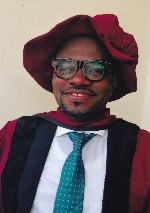
When your job title or qualification disappears, who still remembers you?
12:30
