When silence speaks louder than words
Feature Article
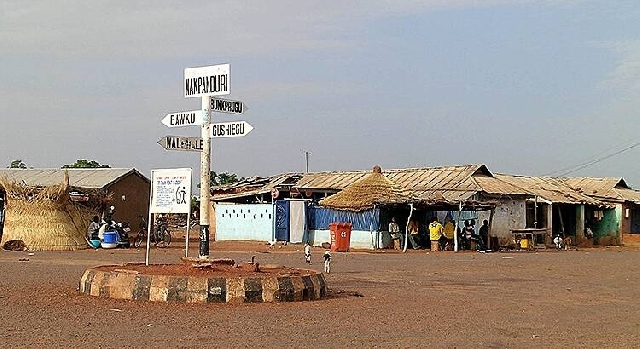 Bawku area
An expert analysis of leadership, ethnicity, and Ghana’s fragile peace
A Statement That Refused to Remain Local
There appears to be progress toward resolving the protracted Bawku Conflict. Like many long-standing conflicts, the feuding factions seem, to some extent, not to fully agree on its origins.
Fortunately, government efforts have provided renewed hope for a lasting resolution.
The mediation efforts led by the Asantehene’s team appear to have identified a possible path toward peace, though not without challenges.
The Member of Parliament for Nalerigu, the traditional home of the Mamprusi, has clearly articulated what he describes as the position of Mamprugu, which appears to reflect the sentiments of the Mamprusi side of the conflict. Less than 24 hours after the historic announcement of the mediation report, a reaction emerged in a statement issued by the Overlord of Mamprugu, which was echoed by the MP, stating; “As the Member of Parliament (The Nayiri MP) representing the good people of Nalerigu/Gambaga Constituency, I endorse the Overlord of the Mamprugu Kingdom’s rejection of the Bawku mediation report. Long live Mamprugu, long live the Nayiri.”
(Statement issued on 17 December)
This development comes amid heightened tensions, with a curfew imposed following violent incidents in which some negotiators were reportedly attacked for allegedly failing to represent certain interests adequately.
In another context, this might have passed as a routine expression of constituency loyalty. In the present context, it could not.
Issued at a time of heightened tension surrounding the Bawku conflict, the statement immediately transcended local politics.
It touched nerves that run deep in Ghana’s national consciousness; ethnicity, chieftaincy, mediation, and the thin line between political speech and political provocation.
For analysts of governance and conflict resolution, the words mattered not only for what they said, but for where they were directed: against a nationally recognised mediation process led by Otumfuo Osei Tutu II and his team. In Ghana’s political tradition, that is no small thing.
Why Bawku Is Never Just Bawku
Bawku has long ceased to be merely a geographic reference.
It is a symbol of how historical grievances, identity, and political signals can intersect, sometimes explosively. Over the years, successive governments have learnt, often painfully, that careless language can inflame passions faster than security deployments can contain them.
This is why Ghana evolved a careful approach: sensitive disputes are elevated above partisan debate and entrusted to respected neutral authorities.
The involvement of Otumfuo Osei Tutu II reflects this tradition. It is designed to cool tempers, not to declare winners; to open space for compromise, not to harden lines.
Against that backdrop, a Member of Parliament publicly endorsing the rejection of such a process; using ethnic rallying language, was bound to raise alarm bells.
The Constitutional Weight of Parliamentary Speech
Members of Parliament are not ordinary commentators.
They are constitutional actors whose words carry institutional weight. Their oath binds them to the Republic, not to a tribe; to unity, not to sectional triumph.
In conflict-sensitive matters, MPs are expected to exercise restraint precisely because their statements can legitimate emotions that might otherwise remain contained.
When an MP speaks in a way that appears to align national politics with one traditional authority against a mediation process, the message received on the ground is rarely nuanced. It is heard as validation.
This is how elite cues work. They travel quickly, stripped of caveats, amplified by emotion.
Otumfuo and the Architecture of Peace
To understand the gravity of the situation, one must appreciate what Otumfuo Osei Tutu II represents in Ghana’s peace ecosystem.
His mediation role is not symbolic pageantry.
It is rooted in centuries-old custom and reinforced by modern legitimacy earned through consistent, non-partisan intervention in difficult disputes.
Otumfuo does not work alone. His mediation teams are carefully composed, balancing tradition, experience, and quiet diplomacy.
They function on trust that all sides, including political actors, will refrain from public actions that undermine the process.
When a politician publicly endorses rejection of that process, the damage is not limited to the immediate dispute.
It weakens confidence in mediation itself.
Once mediation loses credibility, conflicts rarely de-escalate; they metastasise.
The Silence That Changed the Story
Initially, attention focused on the MP’s words. But as days passed, analytical focus shifted to an absence rather than a presence.
Dr. Mahamudu Bawumia did not respond.
This silence transformed the narrative.
Dr. Bawumia is not a marginal figure in Ghanaian public life.
As former Vice President and former Chairman of the Police Council, he sat at the apex of national security oversight.
His public persona has consistently emphasised peace, unity, and inclusion.
When such a figure remains silent in the face of ethnically charged political speech, analysts take notice.
Silence, in politics, is rarely empty.
Shared Identity and the Burden of Impartiality
Dr. Bawumia shares Mamprusi heritage with the MP who issued the statement.
This fact does not assign guilt; but it does raise the standard of expectation.
In conflict resolution, leaders with shared identity are often uniquely positioned to calm tensions within their own communities.
Their words carry particular credibility.
When they do not speak, the inference drawn, fairly or unfairly, is that the silence reflects comfort rather than concern. In this case, that inference is difficult to avoid.
A public correction, a distancing statement, or a reaffirmation of support for the mediation would have closed the interpretive gap. None came.
In analytical terms, the silence has become communicative.
From Silence to Perceived Endorsement
At this stage, the question is no longer whether Dr. Bawumia agrees with the MP’s statement.
The question is whether his continued silence functions as an endorsement.
Political communication theory is clear on this point: when senior leaders fail to challenge destabilising speech from allies, the public reasonably assumes alignment.
This is especially true when the issue involves identity and security.
The longer the silence persists, the narrower the interpretive space becomes. Eventually, silence stops being ambiguous and starts being read as deliberate.
The Real-World Consequences
These dynamics are not abstract.
In areas touched by the Bawku conflict, fear disrupts routine life.
Economic activity slows as traders avoid risk.
Families alter movement patterns. Rumours multiply. Anxiety becomes ambient.
In such conditions, political signals matter more than policy documents.
A clear statement can calm; an ambiguous silence can inflame.
Ghana’s peace has always depended on leaders choosing clarity over convenience at precisely these moments.
The International Lens
Beyond Ghana’s borders, the situation is also watched.
International partners value Ghana as a stable democracy in a turbulent region.
Investors factor peace into risk assessments.
Peace-building organisations study Ghana as a case of relative success.
They understand that stability is not the absence of conflict, but the presence of credible leadership when conflict arises. When senior statesmen appear reluctant to defend neutral institutions, questions naturally follow.
Leadership Beyond Office
Some may argue that Dr. Bawumia no longer holds executive office and therefore bears no obligation to intervene. This argument misunderstands statesmanship.
Moral authority does not expire with office. In many societies, it grows.
Indeed, former leaders often possess greater freedom to speak plainly.
When they choose not to, analysts infer calculation.
This is why the silence is so consequential. It suggests not incapacity, but choice.
The Narrow Path Back to Clarity
From an expert standpoint, the remedy remains straightforward but time-sensitive.
A public dissociation from the MP’s statement, coupled with an unequivocal reaffirmation of support for Otumfuo Osei Tutu II and his mediation team, would immediately recalibrate the narrative.
It would signal that peace outweighs identity, and that institutions still command respect.
Anything less will continue to invite interpretation and not the kind that favours national cohesion.
When History Takes Notes
History has a way of freezing moments.
Later, when passions cool, it records who spoke and who remained silent.
In fragile times, silence is rarely forgotten.
Ghana has built a reputation for choosing dialogue over division.
That reputation has survived because leaders, time and again, intervened when it mattered.
This is one of those times.
The Cost of Unanswered Silence
The MP’s statement may have lit the match, but it is the silence of a senior statesman that now feeds the flame. Whether intentional or not, that silence has reshaped public understanding of the episode.
In politics, especially in conflict-prone contexts, leaders do not control how silence is interpreted; they only control whether it exists. For Ghana’s sake, clarity remains the wiser choice.
Peace, after all, is not maintained by good intentions alone. It is maintained by timely, courageous speech.
---The Author is Mohammed Shadow, a Political Scientist and PhD Candidate, University of Ghana
Source: Classfmonline.com