

Accra flood disaster exposes deep urban planning gaps, sparks call for urgent financial protection measures
News
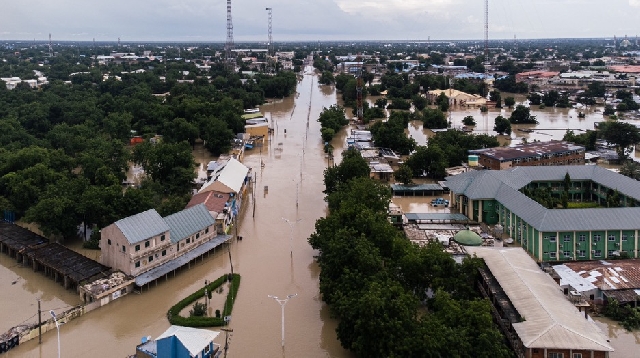 Accra Floods
Days of heavy rainfall in early June 2026 left large parts of Accra submerged, with homes inundated, businesses destroyed, and transport systems severely disrupted across the capital.
Communities including Kaneshie, Odawna, Adabraka, and the Kwame Nkrumah Circle enclave were among the worst affected, as roads quickly turned into rivers, trapping commuters and forcing residents to evacuate their homes.
Emergency responders worked through the night to rescue stranded residents, with dozens evacuated from high-risk flood zones.
Despite the scale of destruction, many residents say the latest flooding episode reflects a long-standing and predictable crisis.
“We are reliving the same story every rainy season… when it rains like this, we know trouble is coming,” one resident lamented, capturing widespread public frustration over recurring flood disasters.
Markets were also heavily impacted, with traders at key commercial hubs such as Kaneshie and Makola reporting significant losses as goods and livelihoods were washed away.
In some cases, families lost household items accumulated over years, while workers and commuters faced widespread disruption.
Business executive Daniel McKorley described the situation as deeply distressing, saying, “My heart weeps… we deserve better as a people.”
While the heavy rains triggered the flooding, experts and industry leaders say the scale of destruction is largely driven by human factors, including poor urban planning and weak enforcement of development regulations.
Urban planners and engineers point to decades of construction in waterways, wetlands, and natural drainage paths, which has significantly reduced the city’s ability to absorb rainfall.
The President of the Ghana Institution of Engineers has previously warned that the country has “done things the wrong way for over 30–40 years,” highlighting unchecked urbanisation and inadequate drainage infrastructure as key contributors to the crisis.
Natural water retention areas have been replaced with concrete structures, while existing drains are often blocked or insufficient, causing rapid surface runoff during heavy rainfall.
Beyond infrastructure damage, the floods continue to impose a heavy economic burden. Small businesses lose capital within hours of flooding, transport systems grind to a halt, and productivity across key sectors is disrupted.
For many low-income households, experts warn that a single flood event can erase years of financial progress, deepening vulnerability and inequality in urban communities.
Push for financial resilience through insuranceIn response to the growing risk, Ghana has developed parametric flood insurance solutions for the Greater Accra Metropolitan Area through collaboration between the Ministry of Finance, UNDP, and international insurance partners.
Unlike traditional insurance, parametric systems trigger automatic payouts when predefined thresholds such as rainfall levels or flood severity are reached, enabling faster financial support for affected communities.
The mechanism is designed to accelerate emergency response, support temporary shelter, and restore livelihoods more quickly than conventional disaster relief systems.
However, despite its development and testing, implementation remains outstanding.
Experts warn that Ghana faces a significant disaster protection gap, with less than 5% of disaster losses in developing countries insured compared to about 50% in advanced economies. In Ghana, an estimated seven out of ten people remain uninsured.
They argue that without financial protection mechanisms, households and government alike will continue to bear the full cost of recurring floods.
The parametric flood insurance framework for Accra is already described as designed, tested, and validated through years of technical collaboration. What remains, stakeholders say, is political will and operational rollout.
Urban flooding is not unique to Accra, with cities such as Lagos, Nairobi, and Dakar facing similar challenges driven by rapid urbanisation and climate change.
Experts say the lesson is clear: infrastructure alone is not enough, and must be complemented by financial preparedness systems that ensure rapid recovery after disasters.
DrAminaSammo, the National Coordinator for Insurance and Risk Finance Facility (IRFF) at the United Nations Programme (UNDP) argues that with rains expected to continue seasonally, concerns remain that Accra’s flood crisis will persist unless structural and financial reforms are implemented.According to her, the critical question is no longer whether floods will return, but whether governments will continue responding after disasters or invest in systems that protect citizens before they occur.
For Accra, the choice between continued losses and resilient preparedness is increasingly urgent — with the cost of delay measured in livelihoods, infrastructure, and human lives.
Source: Classfmonline.com/Cecil Mensah


Trending News
Accra flood disaster exposes deep urban planning gaps, sparks call for urgent financial protection measures
11:20
Albert Okine recognised for family and professional legacy
20:50
South Africa opts out of family values charter over constitutional concerns
14:56
UE/R: Police arrest 80 suspects in anti-crime operation
02:13
NHIA registers Nsawam Prison inmates onto NHIS in major health outreach
14:57
Microsoft says new quantum chip 1,000 times more reliable than predecessor
23:41
Joyce Bawah Mogtari joins diplomatic corps to mark Purple Month celebration
09:15
SIGA boss warns against commercialisation of public recognition
10:27
Kumasi to deploy sanitation guards in renewed clean-up drive
16:19
Ghana will not recognise Same-Sex Marriage —Alhassan Tampuli
14:51
