

Kwabena Donkor calls for overhaul of Ghana mining sector, proposes state asset ownership model
News
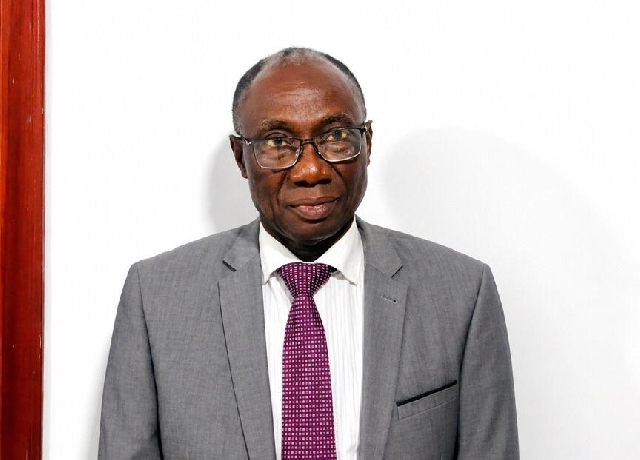 Dr Kwabena Donkor
The former Chairman of Parliament’s Energy and Mines Committee, Kwabena Donkor, is calling for a major restructuring of Ghana’s mining sector that would increase state ownership of mineral assets while allowing private Ghanaian firms to handle actual mining operations.
He is proposing a revival of the State Gold Mining Corporation (SGMC) as a lean, state-owned asset-holding entity that would own mining concessions on behalf of the country but outsource operational activities to indigenous contractors.
According to him, Ghana has developed sufficient technical and managerial capacity to justify a shift in how it benefits from its mineral wealth, without necessarily returning to full state-run mining operations.
“State ownership, private operation” modelDr. Donkor clarified that his proposal is not a call for nationalisation.
Instead, he is advocating a model in which the state retains ownership of mining assets while private Ghanaian companies carry out extraction, processing, and related operations.
He explained that this approach already mirrors existing practice in parts of the sector, where multinational companies hold ownership rights but rely heavily on subcontractors for actual mining activities.
“This is consistent with current practice. Gold Fields does the administration and the ownership. The actual mining operations are done by subcontractors.
The Ghanaian state can use that model,” he noted.
Under the proposed structure, the revived SGMC would focus on oversight, strategic planning, and safeguarding national interests, while maintaining a small, efficient workforce.
Ghana’s growing technical capacityDr. Donkor argued that Ghana’s mining industry has matured significantly, with local professionals now dominating key technical roles such as engineering, geology, metallurgy, and mining management.
He further noted that Ghana has become a net exporter of mining expertise, with professionals increasingly working in established mining jurisdictions such as Australia and Canada.
In his view, this growing capacity strengthens the case for Ghana to retain a larger share of value generated from its mineral resources.
“We are a net exporter of highly skilled human capital in the mining space,” he said.
Concern over value repatriationA central argument in his proposal is that Ghana continues to lose significant revenue through foreign ownership structures in the mining sector, with substantial dividend outflows to external investors.
He cited major operations such as the Tarkwa Mine as examples where large financial returns are repatriated annually abroad, despite Ghanaian participation in operations.
According to him, the issue is no longer technical capability but ownership and value retention.
Lease renewals and resource controlDr. Donkor also drew attention to upcoming lease expirations, noting that Ghana has an opportunity to reassess ownership arrangements when mining leases come up for renewal.
Using the Tarkwa Mine as an example, he argued that allowing a lease to expire without renewal would not amount to nationalisation but rather a legitimate exercise of the state’s constitutional role as custodian of natural resources.
“I’m not calling for nationalisation… Resource nationalism is not necessarily the same as nationalisation,” he explained.
Financing the modelOn concerns about funding, he suggested that Ghanaian operators could access capital through commercial banks, development finance institutions, capital markets, and regional lenders, supported by state-backed guarantees and future gold revenues.
He believes such a structure would enable Ghana to strengthen local participation, retain more value from its resources, and still maintain operational efficiency through private-sector expertise.
Dr. Donkor maintains that Ghana’s mining sector has reached a stage where a new ownership framework is both feasible and necessary to maximise national benefit from its mineral wealth.
Source: Classfmonline.com/Cecil Mensah


Trending News

Ghana Medical Trust Fund showcases role in strengthening healthcare financing at 2026 Health Summit
14:24
Ministers of State Excellence Honours denies 'pay-for-play' allegations following recent awards gala
23:13
Family raises concerns over treatment and costs at Ho Teaching Hospital
18:26
Alhassan Suhuyini hands over modern classroom block to Darul-Ulum Primary School in Kanvili
02:50
Health Ministry summons KATH CEO over suspension of emergency admissions
20:34
W/R: Outgoing Regional Director of Health receives praise from staff and community leaders
02:28
Akandoh unveils specialist training centre, urges trust and transparency in Ghana’s health system
12:12
27-year-old man sentenced to prison for stealing church musical instruments in Hohoe
13:59
Demolition discontent and directives: Greater Accra Minister defends 'Best Minister' Award amid new Jubilee House rules
22:58
Vice President calls for probe into Accra Central Market fire, demands stronger safety measures
18:03