

You can't promise businesses cheaper credit while competing with them - Prof. Isaac Boadi warns Govt
Politics
 Prof. Isaac Boadi, Executive Director of Institute of Economic Research and Public Policy
The 2027 budget will make government the biggest obstacle to cheaper credit for Ghanaian businesses, the President of Africa Policy Lens (APL), Prof. Isaac Boadi, has warned.
In a critique of the budget, Prof. Boadi says the financing plan behind the government's New Economy programme works directly against its own promise to deliver cheaper loans to farmers, manufacturers and exporters.
"The state is now business' biggest rival for credit," he said.
GH¢85 Billion vs GH¢135.7 Billion
The numbers at the heart of his warning are stark.
Total bank credit to the private sector stood at GH¢135.7 billion at the end of October 2026 but the 2027 budget plans GH¢85 billion in net domestic borrowing.
That is equal to about 63 percent of the entire stock of credit currently available to private businesses.
"When the state borrows that much from the same banks and savers, it pushes up interest rates and takes loanable funds away from businesses," Prof. Boadi said.
Borrowing To Help Business By Hurting Business
The New Economy programme is budgeted at GH¢30 billion in its first year.
Prof. Boadi says about GH¢18 billion of that amount comes not from new revenue but from cutting the primary surplus which means more government borrowing.
"By borrowing to protect enterprise, the government risks crowding out the businesses it means to support," he warned.
He explained the dilemma facing banks saying when a government bond pays around 15 percent with no default risk, lending to a small farmer or manufacturer becomes the harder choice.
"Cheaper credit cannot reach businesses while government is the biggest borrower in the same market," he said.
Three demands To Government
The APL is calling on government to change course before the damage is done.
The think tank led by Prof. Isaac Boadi demands government to "keep the primary surplus at 1.5 percent of GDP until public debt falls below the 45 percent anchor" and also "the New Economy should be funded only from verified new revenue, not from more domestic borrowing. Government should also publish a quarterly report comparing its domestic borrowing with private-sector credit growth".
Prof. Boadi added that the government must choose to be a partner to business by borrowing less and leaving room for banks to lend to the real economy or be a rival by borrowing GH¢85 billion from the same pool that businesses depend on.
"You cannot promise businesses cheaper credit while competing with them for the same money," he said.
Source: classfmonline.com


Trending News

NDC's 'New Economy' nothing but a repackaging of failed promises - Dr. Amin Adam
11:05
'A party in power doesn’t need a chaotic leader' – NDC Eastern Youth Organiser backs Opong-Fosu for chairman
20:52
Bail is free! Don't detain for more than 48 hours!! - AG instructs police
19:21
Kwahu West Assembly distributes 3,082 pieces of furniture to schools
15:48
‘I remain and will always be a loyal servant of NDC’ - Disqualified Youth Organiser Najeeb Yahaya says
13:44
‘You are at the top of the health food chain’ - Deputy Health Minister tells public health sudents
13:28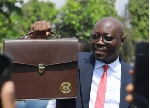
'Credibility on jobs depends on numbers that can be verified' - APL scolds Govt
10:28
Barely 16 months after launching 24-hour Economy and no record of jobs - APL blasts Govt
10:33
President Mahama commissions groundbreaking DNA and vaccine research facilities at NMIMR
09:28
Traditional medicine is a key pillar for universal health coverage - Deputy Health Minister says
09:25