

Operation against Nigerian kidnapping gang kills '200 bandits' - official tells BBC
World News
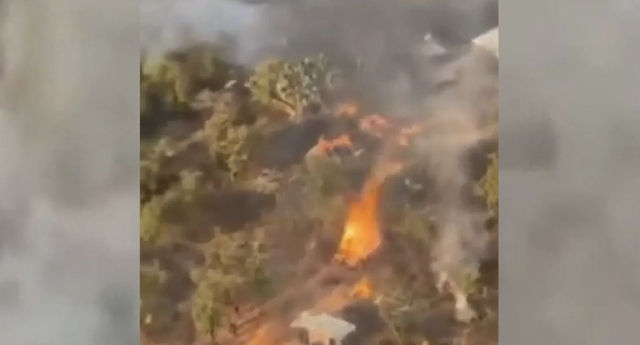 Kogi Police State (Pic): Footage shot from a police helicopter shows one of the camps in a forested area of Kogi state in flames
More than 200 suspected members of an armed criminal gang in central Nigeria have been killed in an ongoing operation, an official has told the BBC.
The large-scale, multi-agency offensive started on Saturday and had also led to arrests, the media officer for the Kogi state government said - without specifying a number.
Footage shared with the BBC by the Kogi police, filmed from a helicopter, shows flames raging from one settlement in a densely forested area.
For years, members of criminal gangs - known locally as bandits - have carried out killings and kidnappings for ransom, mainly targeting those in the north-west - but they have been moving to other parts of the country more recently.
This operation follows a surge in mass abductions, including attacks on schools, which have sparked nationwide outrage and prompted the government to intensify security efforts.
Last month, the authorities secured the release of the remaining pupils and teachers kidnapped in November from a boarding school in Niger state, which borders Kogi.
Several bandit camps were destroyed during co-ordinated operations over the weekend involving the different arms of the country's security and paramilitary forces, Kingsley Fanwo, Kogi state's commissioner for information, said.
But efforts to hunt down those who had fled were being hampered as they were using some of the civilians they had abducted for ransom as human shields, he said.
"Security forces have put them in disarray wherever they try to regroup," Fanwo told the BBC.
"The only problem is that the bandits have kidnapped several individuals which they are using as human shields, knowing that the security forces wouldn't want to kill the hostages along with the bandits."
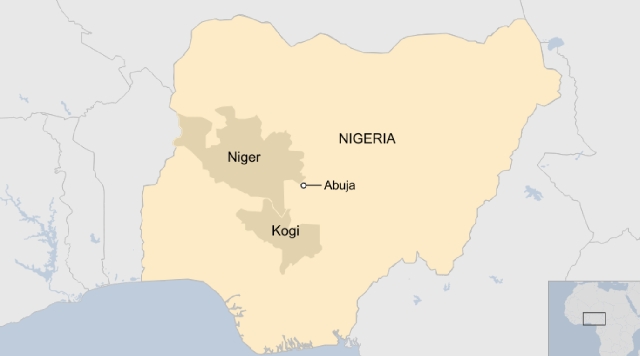
Kogi state has increasingly emerged as an insecurity hotspot.
Its location - linking Nigeria's north and south through dense forest corridors - has made it attractive to armed groups operating across state boundaries, security officials say.
Security expert Bashir Galma, a retired army major, told the BBC the Kogi offensive follows a recent directive by President Bola Tinubu to top security officials to intensify efforts against the bandits.
The number of causalities quoted might well be exaggerated "considering there is no proof" and as politicians try to curry favour with a year to go until elections, he said.
"But at the same time, it's a surprise attack - so a large number of them might have been killed."
As well as kidnapping gangs, Nigeria faces an array of other complex security issues including an Islamist insurgency, clashes over land and separatist unrest.
On Tuesday, the US military tweeted a photo of a plane with "critical military supplies" being unloaded in Nigeria's capital, Abuja.
The US Africa Command's post on X said the delivery supported "Nigeria's ongoing operations" and emphasised its "shared security partnership".
The US has recently become militarily involved in Nigeria - launching some airstrikes on Christmas Day on two camps run by an Islamist militant group in north-western Nigeria.
Last week, US President Donald Trump warned of more strikes if Christians continued to be killed in the West African nation.
There are more than 250 ethnic groups in Nigeria, which is roughly divided into a mainly Muslim north, a largely Christian south, with intermingling in the middle - and the government says people of all faiths have been victims of attacks.
Last week, a foreign ministry spokesman responded to Trump's warning saying that Nigeria would continue to engage constructively with partners such as the US.
''Nigeria remains committed to protecting all citizens, Christians and Muslims alike, without discrimination,'' Alkasim Abdulkadir said.
Source: bbc.com


Trending World

Influential China church reports arrests as crackdown on Christians intensifies
22:13
Spain's Catholic Church signs deal on sexual abuse compensation
22:10
US halts assistance to Somalia over claims food aid was illegally seized
21:55
Iran’s leader accuses protesters of acting for Trump
17:04
Trump warns of more Nigeria strikes if Christians 'continue to be killed'
16:59
The musician and the strongman leader - what you need to know about Uganda's election
16:57
Jersey returns £7m of 'tainted' funds to Nigeria
12:33
Iran medics describe overwhelmed hospitals as protests continue
17:17
Sudan's government returns to capital after nearly 3 years of war
23:57
Thousands march and dozens arrested in Minneapolis protests against ICE
17:24
