
BoG Governor leads Africa's call for faster IMF Debt relief and expanded crisis tools
Business
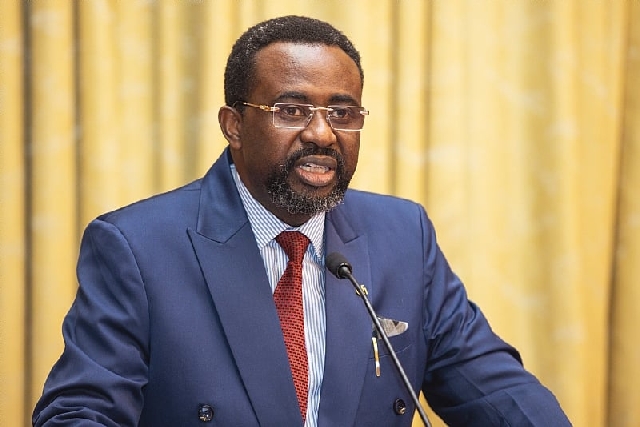 Bank of Ghana Governor Johnson Pandit Asiama sitting with stakeholders
Ghana’s central bank governor called on the International Monetary Fund to accelerate debt relief efforts and expand its crisis response tools, warning that African economies are grappling with mounting pressures that current mechanisms are too slow to address.
Bank of Ghana Governor Johnson Pandit Asiama made the appeal during a meeting of the African Consultative Group in Washington on Tuesday, saying the IMF needed a “step-change” in how it responds to debt distress, climate shocks and tightening global financial conditions.
“African economies continue to operate in an exceptionally challenging macroeconomic environment,” Asiama said, pointing to high debt vulnerabilities, constrained fiscal space and repeated external shocks.
He said spillovers from conflict in the Middle East had worsened inflation and strained external balances across the continent.
African policymakers are increasingly concerned that the pace of international financial support is failing to match the scale of the region’s economic challenges, discussions at the meeting showed.
Asiama said the IMF’s existing debt resolution processes, including the Group of 20’s Common Framework, were often too slow and rigid, calling for a more decisive role by the Fund in coordinating timely and orderly debt restructurings.
Delays in restructuring were prolonging uncertainty, discouraging investment and delaying countries’ return to international capital markets, he added.
“Time-bound restructurings anchored in credible comparability of treatment are essential,” Asiama said, urging stronger participation by private creditors and clearer burden-sharing rules.
He also called for adjustments to IMF programme design, arguing that delays caused by creditor coordination problems should not be treated as policy failures by borrowing countries.
Beyond debt restructuring, Asiama pressed for broader reforms to the IMF’s policy framework, including improvements to debt sustainability assessments for low-income countries and wider use of its Integrated Policy Framework.
He urged faster implementation of the Fund’s “three-pillar approach” for countries facing or at risk of crisis.
The governor also called for increased use of the IMF’s balance sheet to support vulnerable economies, including scaling up concessional financing, institutionalising the reallocation of Special Drawing Rights and making the Resilience and Sustainability Trust more responsive.
“Recent shocks have exposed the need for emergency financing that is adequately resourced and readily accessible,” he said.
Asiama also highlighted the need for capacity-building support in areas such as domestic revenue mobilisation, public financial management and financial regulation, including emerging risks linked to digital finance and cyber threats.
His comments come as many African economies face rising borrowing costs, slower global growth and increasing climate-related disruptions.
The IMF has not yet formally responded to the calls, but debt restructuring and crisis financing are expected to remain central to global economic discussions in the coming months.


Trending Business

GIPC CEO participates in West African Business Summit to boost regional trade
09:29
IES cautions government against scrapping BOST margin, warns of long-term risks to fuel security
07:56
StarOil, SIC Insurance, Wanderlust Ghana Partner to power Ghana’s World Cup roadtrip
22:34
Mahama Praises Awuah Darko’s Afram Plains rice project as model for food self-sufficiency
21:59
KGL to honour Its 2025 CIT obligations by paying GHS 150 million to GRA April 2026
15:32
KGL Group backs Mahama’s renegotiation directive on NLA contract
11:47
Heath Goldfields takes Trafigura loan without gov't approval?
08:44
Dormaa poultry farmers urge gov't to resolve Burkina Faso egg export ban
08:12
Julius Debrah: 2026 Kwahu Business Forum highlights investment opportunities, strengthens public-private collaboration
07:49
NACOC nears approval of cannabis licences as Ghana seeks regulated industry growth
20:33
