

'Accra International Airport': Journalist Manasseh Azure Awuni suggests JB Danquah as replacement for Kotoka airport name
News
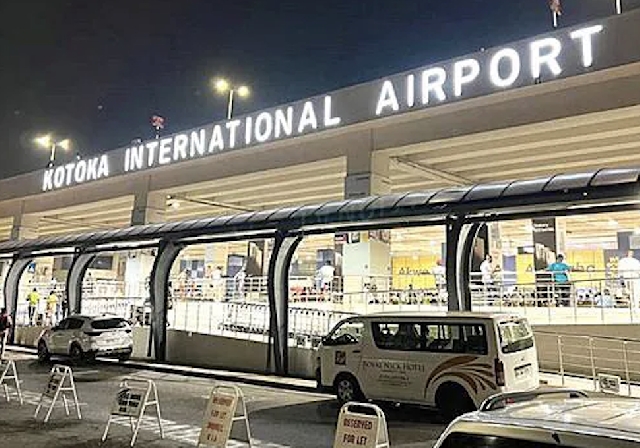 KIA
KIA
Investigative journalist Manasseh Azure Awuni has joined the debate over the renaming of Kotoka International Airport (KIA), arguing that the current honouree does not deserve the national recognition.
In a detailed Facebook post, Manasseh contended that Lieutenant General Emmanuel Kotoka’s role in overthrowing President Kwame Nkrumah is not sufficient grounds for having a major national monument named after him.
He argued that while Nkrumah had flaws, he was not the worst leader in Ghana’s history, and that those who removed him, backed by Western interests, should not automatically be celebrated with monuments.
Manasseh suggested that figures like J.B. Danquah, whose contributions to Ghana’s political and intellectual landscape were significant, are more deserving of such an honour.
Challenging claims that Danquah was a CIA agent, Azure stated: “I have not seen any evidence that J.B. Danquah was a CIA agent.
“I have read some declassified CIA files on Ghana, which show that America and the West were uncomfortable with Nkrumah’s ideology.”
“Danquah’s immense contribution to Ghana’s independence is well documented and should be recognised,” Manasseh emphasised.
The journalist also disputed claims that Kotoka was responsible for Ghana’s current peace and stability, an opinion allegedly shared by journalist Paul Adom Otchere on his Good Evening Ghana TV programme.
Manasseh observed that political instability in Ghana persisted after Kotoka's 1966 coup, comparing the situation with other African nations like the Democratic Republic of Congo.
He emphasised that national recognition should go beyond merely occupying a position of power, citing global examples like Martin Luther King Jr., who is honoured for his impact rather than leadership roles.
See Manasseh's entire post here.
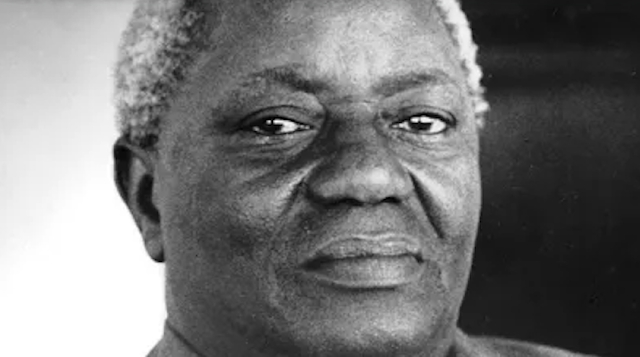 | J.B. Danquah, was a lawyer, scholar, and politician
J.B. Danquah was a prominent figure in Ghana’s independence movement, playing a key role as a founding member of the United Gold Coast Convention (UGCC) and advocating for self-rule and democratic governance. Following independence, he became a critic of Kwame Nkrumah, opposing his concentration of power and authoritarian tendencies, which led some to view Danquah as being in opposition to the new independent government. As a result of his political stance, he was detained under the Preventive Detention Act in 1964 and died in prison on February 4, 1965. His life and political career remain significant in discussions on Ghana’s independence, early post-independence politics, and the development of democratic institutions in the country.
Source: classfmonline.com


Trending News
NHIA staff donate GHS 800,000 to Ghana Medical Trust Fund to support patients with NCDs
15:39
Baba Jamal Ahmed denies vote-buying allegations after recall as Ghana’s High Commissioner to Nigeria
23:51
Ghana, Zambia to review import lists to boost intra-African trade
13:42
24-hour economy has become a policy cliché – Dr Stephen Amoah tells Parliament
17:00
Oppong Nkrumah calls for release of outstanding policy documents, questions inflation approach
01:04
Energy Minister holds talks with AFD to deepen cooperation in Ghana’s energy sector
09:39
Bawumia isn’t vindictive, won’t target those who didn’t support him – Egyapa Mercer
09:47
President Mahama arrives for World Governments Summit 2026 in Dubai
12:42
President Mahama urges stronger health systems, surgical capacity to improve care in West Africa
16:15
Volta Regional Minister marks one year with measurable gains in development and governance
23:15
