

GUTA agrees to reopen locked foreign-owned shops at Suame Magazine
News
 Local spare parts dealers confront foreign dealers in Ashanti Region
Members of the Ghana Union of Traders’ Associations (GUTA) in the Ashanti Region have agreed to reopen foreign-owned shops locked up at the Suame Magazine industrial hub following an emergency intervention by regional national security officials today.
The directive to reopen the stores before noon comes after an early-morning crisis meeting at the Ashanti Regional Coordinating Council (RCC).
The engagement brought together GUTA executives, Suame artisans, and representatives from the Bureau of National Investigations (BNI) and the Ghana Police Service.
Speaking to the media after the meeting, the Ashanti Regional Coordinator for National Security, Rtd. Captain Kwame Jabari, stated that the parties reached an amicable agreement to restore calm and allow for formal dialogue.
"GUTA have decided on their own to open up the shops that they locked up yesterday before 12 o'clock today so that dialogue and communication can go on, and we can settle the issues without needing any conflict," Capt. Jabari said.
While acknowledging that intelligence agencies were aware of the planned protest, Capt. Jabari cautioned GUTA members against taking the law into their own hands.
He emphasised that local trade associations do not possess the legal authority to shut down businesses, noting that enforcement falls strictly under the mandate of state security agencies.
"Such decisions should not be taken by the local counterparts because they are not law enforcement agencies, and they have no authority to go out closing up shops over there. That's supposed to be left for the security agencies to do," he warned.
As part of the resolution, he said, National Security officials will visit Suame Magazine to directly brief local spare parts dealers on the outcome of the meeting followed by a separate engagement with Nigerian traders operating in the enclave.
Capt. Jabari also urged GUTA's national leadership to escalate the matter to the Ministry of Trade and Industry for a permanent nationwide resolution while recommending that the Ashanti Regional Minister establish a local stakeholder committee.
"The regional minister has also been briefed on what transpired in the meeting, and we hope that the regional minister can set up a committee comprised of the various stakeholders so that this issue can be settled locally," Capt. Jabari noted.
He added: "We also urge the national GUTA to take up the issue at a national level so that we can have stakeholder engagement with the Ministry of Trade, National Security, and the Police Service, so that this issue can be solved once and for all."
For his part, the Ashanti Regional Chairman for GUTA, Anthony Oppong, confirmed the agreement, estimating that roughly 80 percent of the targeted shops at Suame Magazine were closed during Monday's action.
He explained that requesting National Security officials to personally address the traders at the hub was necessary to dispel any suspicion among members that GUTA executives had been compromised to reopen the stores.
"Most of the time, when these shops are closed, and they are reopened like this, the notion is that the leadership have betrayed the boys and has collected money from the Nigerians and their authorities," Mr Oppong said, adding, "So we wanted them to come and let them know the reason why the shops are being opened."
Mr. Oppong expressed deep frustration over what he described as a 20-year failure by successive governments to enforce the Ghana Investment Promotion Centre (GIPC) Act which reserves retail trading in local markets for Ghanaians.
He noted that two months prior following a similar shop closure at the Acheamfuo market, GUTA submitted requested data on foreign traders to the Regional Minister but had yet to receive a response.
"The law says that you shouldn't stay in the market. So if you are not supposed to stay in the market and you are there, it means the right thing is to move out of the market," he stated, highlighting, "We are very, very disappointed because this thing has been lingering on for the past 20 years and we've been fighting back and forth."
Rejecting suggestions that the agitation was politically motivated, Mr. Oppong attributed the unrest entirely to severe economic pressure on local businesses.
He alleged that foreign traders exploit West African regional trade protocols, originally intended for locally manufactured goods, to bring imported Asian goods across land borders without paying Ghana’s standard port duties which he cited as ranging between GH¢80,000 and GH¢150,000 per 40-foot container.
Coupled with high domestic bank interest rates of around 24 percent, he argued, local traders cannot compete, adding that foreign competitors also flood the market with cheaper, lower-quality imitations of spare parts sourced by Ghanaian importers.
"There is nothing political about this. It is our business; it is because our businesses are collapsing," Mr Oppong stressed, stating, "You cannot compete with somebody who is not paying those duties, so definitely they can undersell us."
Addressing a viral video from Monday’s incident showing a man in a smock being assaulted, Mr. Oppong clarified that no arrests were made and that the individual was a Ghanaian, not a Nigerian.
According to the GUTA chairman, a Nigerian shop owner had allegedly hired local machomen to prevent traders from locking his store, sparking a scuffle in which the man was kicked and dragged before GUTA executives intervened and sent him to the hospital in a taxi.
"Luckily enough, there were some of our executives around who stopped them, and he was whisked away from the scene in a taxi. He was taken to a hospital, and he's doing well. It wasn't any violent, planned activity to intimidate or hurt anybody," he clarified.
He added that the victim is recovering well.
Mr. Oppong confirmed that GUTA's concerns regarding foreign retail operations in other Kumasi commercial centers including Acheamfuo and Alaba have been factored into the ongoing discussions with National Security with the union expecting a swift decisive action from the government to protect local livelihoods.


Trending News

Galamsey Fight: Togbe Afede urges chiefs to back Lands Minister
22:17
Kwahu West Assembly distributes 3,082 pieces of furniture to schools
15:48
Suame Magazine: Violent clash breaks out as local traders 'fight' back decision to open foreigners' shops
17:25
‘I remain and will always be a loyal servant of NDC’ - Disqualified Youth Organiser Najeeb Yahaya says
13:44
Greater Accra Regional Minister warns MMDCEs over poor assembly performance and delayed reports
14:54
‘You are at the top of the health food chain’ - Deputy Health Minister tells public health sudents
13:28
GUTA agrees to reopen locked foreign-owned shops at Suame Magazine
13:58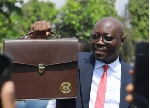
'Credibility on jobs depends on numbers that can be verified' - APL scolds Govt
10:28
OASL mobilises GH¢405 million stool land revenue as of October 2026
12:54
Barely 16 months after launching 24-hour Economy and no record of jobs - APL blasts Govt
10:33