

Ghana pays US$2.1 billion to Eurobond holders as confidence returns to economy – Ato Forson
News
 Finance Minister Dr Cassiel Ato Forson
Finance Minister Dr Cassiel Ato Forson has announced that the government has paid US$2.1 billion in principal and interest to Eurobond holders since January 2025, describing the achievement as a sign of Ghana's renewed credibility in international financial markets.
Presenting the 2026 Mid-Year Budget Review in Parliament, Dr Forson said the payments had been made without placing undue pressure on the country's foreign exchange reserves.
"Since January 2025, government has paid a total of US$2.1 billion in principal and interest to Eurobond holders without placing undue pressure on Ghana's foreign exchange reserves," he said.
The Finance Minister said the government's consistent servicing of its external debt obligations was helping to restore investor confidence after a period of uncertainty.
"There was a time when the world doubted us. Today, every payment made on time answers that doubt, assuring bondholders in London, pension funds in New York and investors at home that our word is our bond," he told Parliament.
He stressed that the government's credibility was being rebuilt through timely repayments rather than rhetoric.
"Payment after payment, coupon after coupon, Ghana is proving one thing beyond dispute. We now keep our word. That is how market confidence is rebuilt—not through speeches, but through repayment," Dr Forson said.
According to him, financial markets have responded positively to the government's fiscal discipline and prudent debt management.
He said Ghana's borrowing costs had fallen by half, saving the country GH¢4.2 billion in financing costs during the first six months of the year.
Dr Forson also disclosed that Ghana's Eurobond yields had declined by about 300 basis points since the beginning of the year, describing the development as a strong vote of confidence by investors in the country's economic reforms and fiscal management.
He added that lower treasury bill rates were also driving down lending rates across the banking sector, making it cheaper for households and businesses to borrow, invest, expand and create jobs.


Trending News

SOWIM ’26 Conference – UCC edition set to ignite hearts with “Kairos Perisseias”
17:49
Universal Adult Suffrage in primaries could disadvantage minority tribes - Ahmed Ibrahim warns
19:36
Majority defends Finance Minister’s spending; cites investments in health, education and social protection
00:07
Consult with lawyers to avoid misreporting – Lawyer Yaw Anokye Frimpong tells
15:05
US citizens lost at least $10 billion to scammers in 2024 – US Secretary of State
19:34
DDEP: Govt to honour August coupon payment in full – Ato Forson assures
18:06
Gov't backs lowering presidential age limit to 35
17:40
We're not happy seeing Labour Commission place injunctions when workers serve notice of strike - Organised Labour
17:01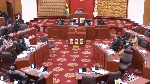
Five MPs reintroduce Anti-Witchcraft Accusations Bill to criminalise witchcraft allegations
18:06
Not every word used in court means the same as in the dictionary – Lawyer Yaw Anokye Frimpong
14:18
