

Universal Adult Suffrage in primaries could disadvantage minority tribes - Ahmed Ibrahim warns
News
 Ahmed Ibrahim
The Minister for Local Government and Religious Affairs and Member of Parliament (MP) for Banda, Ahmed Ibrahim, has expressed concerns over the implementation of universal adult suffrage in political party parliamentary primaries, warning it could disadvantage the minority ethnic groups in some constituencies.
Speaking to the media in Parliament in reaction to the Supreme Court’s ruling allowing all registered voters to participate in parliamentary primaries, the Banda MP said while expanding voting rights is consistent with democratic principles, the system could have unintended consequences for minority communities.
According to him, constituencies dominated by larger ethnic groups may consistently elect candidates from the majority tribe, making it difficult for qualified candidates from minority tribes to secure parliamentary seats.
Ahmed Ibrahim referenced similar concerns he raised in 2016 when discussions on the issue first emerged, citing Uganda as an example where, according to him, a similar arrangement did not produce the desired outcome.
He argued that under such a system, competent candidates from minority tribes may be compelled to contest as independent candidates but still struggle to win because of the numerical strength of majority groups.
The Banda MP is therefore calling for safeguards to protect minority representation if political parties move to implement the Supreme Court’s ruling on universal adult suffrage in parliamentary primaries.
Ahmed Ibrahim further stated that if the Supreme Court’s ruling is implemented, although it is constitutionally sound, it could be socially discriminatory.
He argued that the universal adult suffrage system could produce unintended consequences which is why he opposed its introduction in 2016, a position he said ultimately contributed to his party going into opposition.
He maintained that the current delegate system is at least manageable and provides some level of balance.
However, if the Supreme Court decides to abolish the delegate system, he cautioned that Ghanaians should be prepared for the consequences, warning that the new system could fuel tribalism and deepen ethnic divisions in the country’s political process.


Trending News

Parliament passes Excise Bill 2026 to strengthen tax compliance and modernise customs operations
13:14
There will be no burial of Apostle Kwadwo Safo Kantanka on July 30 - Akofena orders
11:39
CompuGhana launches New East Legon showroom; Rewards customers in Grand Goal Rush Draw
12:56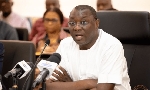
2026 Mid-Year Budget full of ‘bones and no meat’ - Fmr. Finance Minister claims
08:23
Ghana to host 28th AMCOA conference in August to shape future of health regulation in Africa
14:40
‘He’s paid his dues’ - NDC Communicator Roger Wills calls on leaders to learn from Late Prez Atta Mills
11:17
Mostly cloudy skies to dominate with rains, thunderstorms expected across parts of Ghana today - GMet forecasts
13:10
ECG ‘blows away’ GHS170 million without approval - Auditor General reports
13:06
There are 91,000 slaves in Ghana – Global Freedom Network
02:06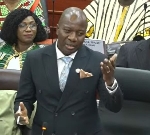
Where is the man who put us in debt? – Majority Leader demands Ofori-Atta’s return
08:01
