

Mahama links father’s detention under military rule to his commitment to human rights
News
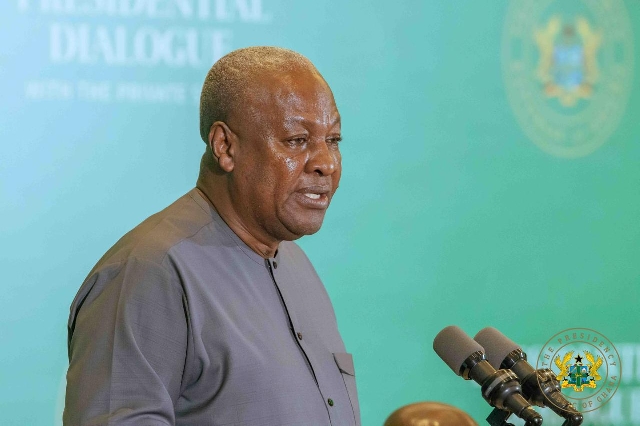 President John Dramani Mahama
President John Dramani Mahama has opened up about the personal history that shaped his views on justice and democratic governance, recounting how his father’s repeated detention under military regimes influenced his enduring commitment to human rights and due process.
Speaking during the opening of the 2026 judicial year of the African Court on Human and Peoples’ Rights in Arusha, Tanzania, Mahama reflected on the political turbulence his family endured following the 1966 overthrow of Kwame Nkrumah.
He said his father, who had served as a minister in Nkrumah’s government, was first detained after the coup and later arrested again for counselling a military leader to relinquish power.
“My connection to justice and human rights is rooted in my family’s history,” he said. “I remain the child whose father was detained for serving his country and advising its leader.”
According to Mahama, his father spent more than a year in detention after the coup and was subsequently taken into custody again after writing to then military ruler Ignatius Kutu Acheampong, urging him to step aside while he still enjoyed public support.
The president said those events left lasting emotional scars, recalling vivid childhood memories marked by anxiety and fear.
He described recurring childhood fears and “nightmares” about his father standing before judges, adding that such experiences showed how easily those in power can act as “judge, jury and executioner”.
Mahama stressed that injustice extends beyond individuals, often affecting entire families and communities, and argued that stronger legal and institutional safeguards are necessary to check abuse of authority.
To illustrate the broader continental stakes, he referenced the ordeals of prominent African figures such as Patrice Lumumba, Thomas Sankara, and Nelson Mandela, noting that imprisonment, exile and assassination have too often followed weak legal protections.
He suggested that earlier access to a strong regional judicial body might have changed the course of some of those histories.
“For the past 20 years, we’ve had a court that can protect the rights and dignity of African people beyond the borders of our individual nations,” he said, describing the institution as vital for safeguarding the continent’s future.
Mahama concluded by urging governments to strengthen domestic justice systems and fully support the court’s mandate to ensure that “no one stands alone” when confronted by the power of the state.
Source: classfmonline.com


Trending News

NMEP sets up expert group to review 2024–2028 malaria elimination strategy
23:38
Abraham Koomson demands firm action to address rising indiscipline in schools
10:11
Gold-for-Reserve: Minority Leader admonishes government to credit Bawumia for game-changer policy
00:31
Credit-depleting metres: Energy Minister visits Ghana Standards Authority energy metre testing laboratory
09:04
DVLA CEO welcomes Association of Former Directors, pledges support for initiative
15:32
MP for Bibiani-Anhwiaso-Bekwai assures constituents of continued dev't, pushes for road projects
23:08
Annoh-Dompreh raises alarm over DACF capping and growing arrears
10:25
Stakeholders call for urgent education reforms following 2025 WASSCE results
14:29
AMA Health Directorate reviews 2025 performance, flags maternal deaths, HIV burden and staffing gaps
00:35
Bridget Bonnie & friends mark 6th blood drive with maternal blood bank initiative at 37 Military Hospital
09:38
