
No basis for reparations over slave trade: Afenyo-Markin
News
 Minority leader Alexander Afenyo-Markin
Minority leader Alexander Afenyo-Markin has pushed back against demands for reparations linked to the Trans-Atlantic Slave Trade, arguing that accountability should not be attributed exclusively to foreign parties.
He noted that certain local actors were also involved in the capture and sale of fellow Africans, insisting that this aspect of history must be considered in ongoing conversations about compensation.
Contributing to discussions on the floor of Parliament on Friday, March 27, the Effutu MP said the complex nature of the slave trade makes calls for reparatory justice more difficult to resolve, even though he strongly denounced the inhumane treatment suffered by victims.
However, the Majority Leader and Bawku Central MP, Mahama Ayariga, took a different position, defending calls for compensation.
He argued that the wealth of many developed nations can be traced to the exploitation of enslaved people, particularly through plantation economies.
“When somebody berths a vessel at Cape Coast and you decide to go to the North, Bono area, get to the Ashanti area, to the Assin area and you are chasing the strongest among your own people, then after 100 years you say, ‘I should be compensated’. Who should compensate who? We maltreated our own and told the white man that he should also maltreat our own. The story must be told and must be put in its proper context.
“It is also a fact that the inhumane treatment, the unfortunate humiliation, the marginalisation, injustice and abuse of our ancestors who became victims of this slave trade must be condemned,” he said.
“Many of those countries that have wealth can trace their wealth to slavery. Many of the capitalist countries that have become rich started from plantations that were worked on by slaves. It is the labour of these slaves that helped them to build capital which later on added to technology and other considerations led to the wealth those nations are enjoying now. As a result, there is the need to share that wealth in recognition of those who have been the foundation of the creation of that wealth,” he said.
Source: Classfmonline.com/Zita Okwang


Trending News

Accra International Conference Centre shut down for renovation
12:35
Yaw Opoku Mensah slams Mahama over ‘rebranded’ reparations push
19:23
Ghana's Health Minister visits Korle-Bu Teaching Hospital, emphasises quality care
18:41
Ghana and EU sign landmark defence deal to combat militant Islamist threat
00:42
GFL warns rising wage bill could strain Ghana’s finances
07:23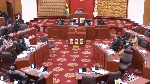
Parliament proceeds on recess for Easter break after passing key bills
12:27
AU welcomes UN resolution declaring slave trade a crime against humanity
16:14
President Mahama secures UN backing for reparations motion with 123 votes
18:04
N/R: Police arrest 77 suspects in Tamale and Savelugu anti-drug operation
00:32
Energy Minister engages World Bank to deepen sector reforms
06:42
