

Vice-President calls for continental academic body to defend university autonomy in Africa
Education
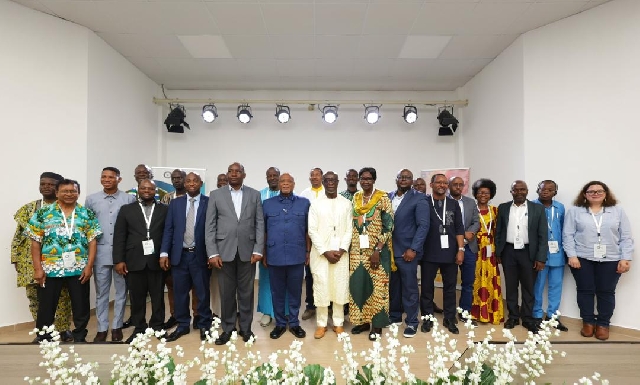 Stakeholders at the event
In a powerful address at the opening of the African Congress of Academic Freedoms (ACAF) conference, the Vice-President of the Republic, Prof Jane Naana Opoku-Agyemang, has issued a rallying cry for the establishment of a continental body to represent academics and safeguard intellectual freedom across Africa.
The conference, themed “Safeguarding Academic Freedom in Africa: A Continental Dialogue for Collective Action,” has brought together 44 Academic Staff Associations (ASAs) from across the continent at the West African Genetic Medicine Centre (WAGMC), University of Ghana, Legon, from 12th to 14th November 2025.
Drawing on her experience as a former Vice-Chancellor, the Vice-President traced the evolution of ASAs from their initial focus on “bread and butter” welfare issues to becoming bastions of academic freedom, particularly during the eras of one-party and military rule in the 1970s to 1990s.
She highlighted the landmark Dar es Salaam Declaration of 1990 and the Kampala Declaration as pivotal moments where African scholars formally linked the struggle for university autonomy to wider popular struggles for democracy and human rights.
“The participation of the academic community in the struggle of their people is inseparably linked with the struggle for the autonomy of institutions of higher education and the freedom to pursue knowledge without let, hindrance and interference from persons in authority,” she stated, quoting the historic Dar es Salaam Declaration.
The Vice-President pointed to Ghana’s own recent battle against the Public University Bill in 2018 as a stark example of ongoing threats to institutional autonomy.
She reminded the audience of her own public opposition to the bill, which she said would have given a sitting president the power to appoint and fire vice-chancellors.
“A bill that will give the President the power to appoint and fire a vice-chancellor, or allow the sector minister to give policy direction to universities, which will have to be complied with; has no business being considered for passage into law,” she asserted, noting the successful resistance by the academic community that prevented its passage.
To fortify these gains, the Vice-President proposed two key areas for action. First, she urged ASAs to focus on leadership development within public universities to promote democratisation.
Second, she championed constructive dialogue between academics, government, and university management to align perceptions of the university’s mission.
Crucially, she identified a major structural gap in the African academic landscape: “The lack of a continental body to represent the interests of academics before the African Union and its human rights bodies such as the African Commission and the African Court on Human and Peoples’ Rights constitutes a major gap.”
In closing, she commended the ACAF for its initiative, signalling that a coordinated, continental defense of academic freedom is not just necessary, but is now firmly on the agenda.
Source: Classfmonline.com/Cecil Mensah


Trending News

VP Naana Opoku Agyemang opens ICASA 2025, calls for Africa-led healthcare solutions
13:33
Minority Caucus condemns poor 2025 WASSCE results, calls for urgent action
14:17
KG Agbodza: Roads Minister says GHS5b road budget inadequate
18:51
41st National Farmers Day opens in Ho with strong call for food security, innovation and collaboration
22:30
GA/R: Ga South Assembly set to exhume wrongfully buried body at Oboum
10:47
Togbe Afede XIV welcomes BoG management team to retreat in Ho
08:55
Ga Mantse unveils plans to transform Agbogbloshie Market into a 100,000 stall modern complex
13:16
Hajj agents urged to channel concerns through Ministry for better coordination — Ahmed Ibrahim
13:48
Parliament approves GH¢5.3bn allocation for Roads Ministry
18:43
Construction of 3 new regional hospitals to begin 2026, says Health Minister Akandoh
21:57