
Interior Minister highlights Ghanacard as cornerstone of national development at NIA 20th anniversary launch
General News
 Interior Minister at NIA event
The Minister for the Interior, Mohammed Mubarak Muntaka, has underscored the importance of Ghana’s national identity system, describing the Ghanacard as a key pillar of national security, governance, and economic inclusion.
He made the remarks at the 20th anniversary launch of the National Identification Authority (NIA) in Accra, held under the theme “Reflecting on the Past, Securing the Future.”
The event marked two decades of the NIA’s transformation from a conceptual initiative in 2006 into a fully developed biometric identity system serving millions of Ghanaians.
Mr. Muntaka noted that the institution’s journey had been shaped by early challenges, including limited resources and high expectations, but credited its progress to sustained commitment, vision, and institutional resilience.
He stated that the Ghanacard has evolved beyond a simple identification document to become a critical tool for public service delivery, social inclusion, and national development planning.
Outlining government’s future priorities for the identity ecosystem, the Interior Minister highlighted three key focus areas: expanding universal identity coverage, strengthening data protection and system integrity, and advancing innovation to improve service delivery.
He reaffirmed government’s commitment to supporting the National Identification Authority and urged staff and stakeholders to sustain progress in identity management and digital governance.
According to him, national identity systems must continuously evolve in line with Ghana’s development needs and technological advancements.
The Executive Secretary of the NIA, Wisdom Kwaku Deku, also addressed the gathering, reflecting on the institution’s achievements and emphasizing the role of technology in improving efficiency and expanding access to identity services.
He reaffirmed that the Ghanacard remains central to promoting inclusion and enabling access to essential services for all citizens.
Source: Classfmonline.com/Cecil Mensah


Trending News

Buffer Stock Trial: Godfred Yeboah Dame to appeal High Court order directing AG to amend fmr NAFCO CEO’s charges
20:37
Bawumia endured 8 years of insults without arresting no one - Manasseh Azure says
12:39
Wontumi Conviction: Our prosecution witnesses avoided custodial sentences because they utilized our ‘plea bargaining’ law - Justice Srem Sai replies critics
14:09
Galamsey fight: Wontumi’s 20-year jail sentence is victory for us - Solomon Owusu
12:00
Global InfoAnalytics poll ranks Frank Annoh-Dompreh Ghana’s top-performing MP
09:38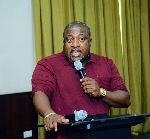
Miracles Aboagye’s Arrest: EOCO is ‘unprofessional and are liars’ - Nana B
14:22
'True measure of a Finance Minister is not how much he spends' – Ato Forson
20:34
Galamsey Cases: NDC dropped all their cases to chase NPP figures - Kojo Oppong alleges
12:38
You admitted your appointees are into galamsey but no one has been prosecuted – Kofi Tonto slams Mahama
14:07
Wontumi Case: Don’t let emotions cloud justice - Solomon Owusu
11:58
