

Analyst questions comparisons between Buhari and Bawumia in Ghana’s political debate
Politics
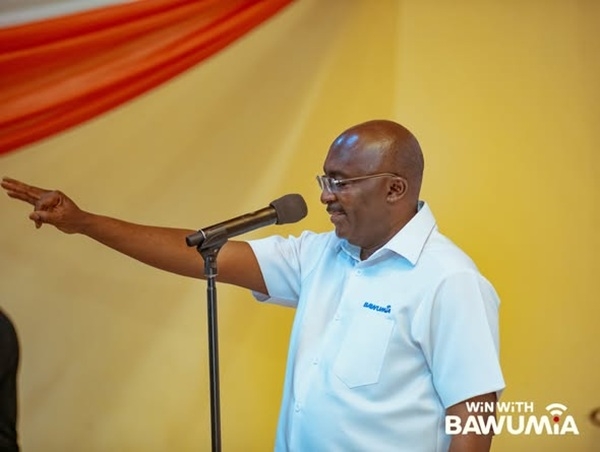 Dr Bawumia
An emerging political analysis by Dr Razak Kojo Opoku has challenged comparisons often drawn between former Nigerian President Muhammadu Buhari and former Vice President Dr. Mahamudu Bawumia, arguing that the similarities frequently cited in public discourse are largely superficial and ignore key historical, political, and demographic differences.
The commentary notes that while the first names “Muhammadu” and “Mahamudu” may sound alike, their political journeys and national contexts differ significantly.
According to the analysis by Dr Opoku, Muhammadu Buhari spent 16 years contesting Nigeria’s presidency, making four unsuccessful attempts between 2003 and 2011 before finally winning in 2015.
This period coincided with a relatively balanced Muslim-Christian population in Nigeria.
By contrast, Dr. Bawumia has not experienced a prolonged period of opposition candidacy at the presidential level.
It further highlights that Buhari previously ruled Nigeria as a military head of state between 1983 and 1985, a background the analyst says is fundamentally different from Dr. Bawumia’s career as an economist and civilian politician.
The analysis also recounts Buhari’s multiple electoral defeats under different party banners—the All Nigeria People’s Party (ANPP) and the Congress for Progressive Change (CPC)—before finally securing victory in 2015 on the ticket of the All Progressives Congress (APC), a coalition of opposition parties and breakaway factions from the ruling People’s Democratic Party (PDP).
In addition, the role of Buhari’s Christian running mate, Professor Yemi Osinbajo, a senior pastor at the Redeemed Christian Church of God, is cited as a significant factor in balancing religious considerations during the 2015 elections.
The analysis raises questions about whether similar strategies would be considered in Ghana if religious balance becomes a central campaign issue.
Ethnicity is also identified as a major difference. Buhari hails from the Hausa-Fulani ethnic group, Nigeria’s largest, while Ghana’s demographic makeup presents a very different political landscape for any candidate.
The analysis cautions against applying Nigeria’s political precedents directly to Ghana, describing such comparisons as misleading.
It argues that using Buhari—or Nigeria’s 2023 Muslim-Muslim ticket led by President Bola Ahmed Tinubu—as justification for electoral strategies in Ghana overlooks Nigeria’s unique religious and ethnic composition, as well as Tinubu’s long-standing influence and leadership within Nigerian party politics.
While stressing opposition to politics based on religion or ethnicity, the writer maintains that competence and delivery should remain the primary criteria for leadership.
The analysis concludes that demographic realities and political histories in Ghana and Nigeria are too distinct for direct comparisons to be valid, urging political actors and commentators to ground their arguments in context rather than symbolism.
Source: Classfmonline.com/Cecil Mensah


Trending News

Tanko Foundation supports AOGA 1976 legacy project at Aburi Girls as Special Guest of Honour commissions new facilities
15:11
Insurance Commissioner commends IBAG leadership, urges action to improve penetration
10:58
NPP January 31 Primaries: Osei Owusu calls on aspirants to honour results
13:17
Campaigners call for visa-free Africa by 2030 after 160-day continental journey
15:00
NPP primaries: Adutwum promises 'patriotic health insurance', scholarships, free university education as he campaigns in Volta Region
21:29
EC to complete printing of NPP ballots on Thursday
11:18
GA/R: Ningo-Prampram Assembly supports 46 PWDs with livelihood empowerment items
12:12
Analyst questions comparisons between Buhari and Bawumia in Ghana’s political debate
17:07
Kwame Nkrumah Memorial bark backs calls to rename Kotoka Airport to honour Nkrumah
10:59
Unauthorised buildings demolished by AMA at Awudome, North Kaneshie, tuesday market
12:48
