

COCOBOD explains financing challenges, farmer payments and cocoa pricing amid market downturn
Business
 COCOBOD
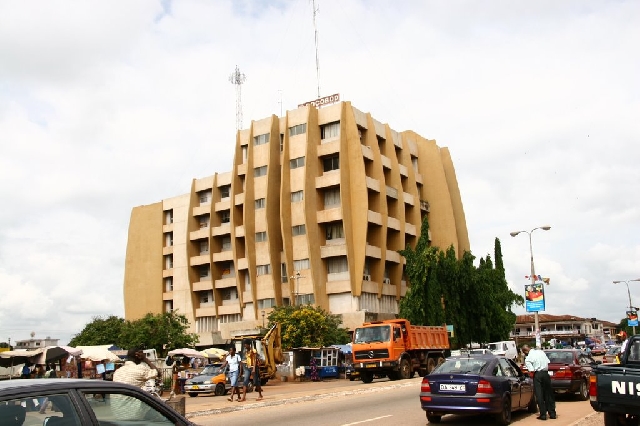
The Ghana Cocoa Board (COCOBOD) has clarified issues surrounding cocoa financing, farmer payments, international price movements and recent operational decisions, following growing public concern over alleged payment delays and financial constraints within the sector.
Loss of Syndicated Financing
COCOBOD explained that in previous seasons, Ghana relied on syndicated loans to finance cocoa purchases, ensuring steady funding throughout the season regardless of market conditions. However, for the 2024/25 cocoa season, Ghana was denied access to syndicated financing after the country failed to fully honour contractual obligations during the 2023/24 season.
According to COCOBOD, Ghana was contracted to supply 800,000 metric tonnes of cocoa in the 2023/24 season but fell short by 333,767 metric tonnes. The shortfall was subsequently rolled over into the following season, weakening confidence among international lenders.
The situation was further compounded by the Domestic Debt Exchange Programme (DDEP), which significantly affected the finances of COCOBOD and reduced the confidence of international banks. As a result, the international banking community shut its doors to Ghana, making syndicated financing impossible.
New Financing Model Introduced
In the absence of syndicated loans, cocoa off-takers and buyers agreed to directly finance cocoa purchases under strict conditions. Under this arrangement, buyers provided funds with the condition that Ghana would first service the rolled-over 333,767 metric tonnes at the original contract price of $2,600 per tonne. The buyers also retained the right to determine which Licensed Buying Companies (LBCs) would receive funds for cocoa purchases.
For the 2024/25 season, the financing model was structured as 60/40, meaning 60% of funds were paid upfront and 40% upon shipment. COCOBOD’s operational costs, including margins and payments to LBCs and hauliers, were largely tied to the 40% portion.
Despite acknowledging that the model was not sustainable, COCOBOD maintained it into the 2025/26 season in an effort to clean up its financial books. To ensure farmers were protected, the structure was adjusted to 80/20, allowing more upfront payments.
COCOBOD revealed that over 235,000 tonnes of the rolled-over contracts have already been serviced, at an additional cost of $500 per tonne, as the farmgate price in 2024/25 rose to $3,100 per tonne, above the original contract price of $2,600.
Clarification on Alleged Non-Payment Since November
Addressing claims that farmers have not been paid since November, COCOBOD stated that the claim is not entirely accurate. Under the new financing model, some LBCs received funding directly from off-takers and were therefore able to pay farmers promptly for cocoa beans purchased.
However, COCOBOD admitted that LBCs which did not receive funds from off-takers had to source their own financing to purchase cocoa and submit it through the Cocoa Marketing Company (CMC).
While outstanding payments remain, COCOBOD confirmed that payments have been made to farmers and LBCs between November and February, despite the financial constraints.
Impact of Falling Global Cocoa Prices
COCOBOD also pointed to a sharp decline in international cocoa prices, which has affected major producing countries such as Ghana and Côte d’Ivoire. Global prices, which peaked at nearly $12,000 per tonne in 2024, have dropped to about $4,000 per tonne and have remained around that level.
Although Côte d’Ivoire has not officially announced a price reduction, reports suggest that cooperatives there have been selling cocoa at lower prices. This development has made Ghana’s cocoa relatively expensive on the international market.
COCOBOD noted that Ghana spends not less than $6,300 per tonne from farmgate price to shipping, far above current international market prices. As a result, many buyers have declined to sign new contracts, affecting both Ghana and Côte d’Ivoire.
Despite these challenges, COCOBOD disclosed that 580,000 tonnes out of the projected 650,000 tonnes for the 2025/26 season have already been bought, graded and sealed.
No Immediate Price Reduction for Farmers
On speculation about a possible reduction in cocoa prices in Ghana, COCOBOD emphasized that cocoa prices are set by the Producer Price Review Committee, which includes representatives of farmers, the Ministry of Finance, the Bank of Ghana, transporters, LBCs and COCOBOD.
Until the committee meets to review the price, the current farmgate price remains in force. COCOBOD and government assured farmers that they remain committed to securing the best possible price, with an official announcement expected in due course.
Purchase of New Operational Vehicles
COCOBOD also addressed public criticism over the purchase of new vehicles, explaining that the vehicles were procured strictly for operational purposes. The funds used did not come from allocations meant for farmers but from a residue fund, classified as Internally Generated Funds (IGF) of the Board.
The Board noted that nearly 70% of its operational vehicles are over 10 years old, and the acquisition was necessary to enhance efficiency, ultimately benefiting cocoa farmers.
Outstanding Legacy Issues
COCOBOD highlighted several legacy financial challenges, including the procurement of jute sacks that are no longer required, with the last procurement alone costing $48 million.
The Board also raised concerns over cocoa roads, which have cost GH¢26 billion, with GH¢21 billion incurred between the 2018/19 and 2020/21 seasons without budgetary allocations.
Additionally, $350 million was allocated for the rehabilitation of 156,400 hectares of cocoa farms, but only 40,000 hectares were delivered, despite an additional GH¢700 million being accessed.
COCOBOD disclosed that its total debt currently stands at GH¢32.9 billion, underscoring the scale of financial restructuring required to stabilise the cocoa sector.


Trending Business
Africa’s future must be built by great African business champions – KGL Group Chairman advocates at APD 2026
18:52
Ghana records sharp decline in food inflation under Feed Ghana Programme
12:25
KGL Group CEO calls for African business champions to drive continental prosperity
12:08
GTA clarifies service charges and taxes for restaurants
06:57
Dr Johnson Asiama’s BoG leadership: Cedi gains, economic growth and business confidence
16:09
Ketu North MP receives customised footwear, pledges support for youth entrepreneurship
15:04
APD26: Nana Oye Bampoe Addo calls for stronger AfCFTA support for women traders
09:56
GOLDBOD begins local refining of ASM gold as Gold Coast Refinery operations take off
00:54
Mahama in Lusaka for state visit, Ghana–Zambia business dialogue to boost trade and investment
17:26
GHS2.1bn arrears: GWCL rolls out revenue enhancement team — MD
11:39
