
Bank of Ghana holds policy rate at 14.7% as inflation risks rise
Business
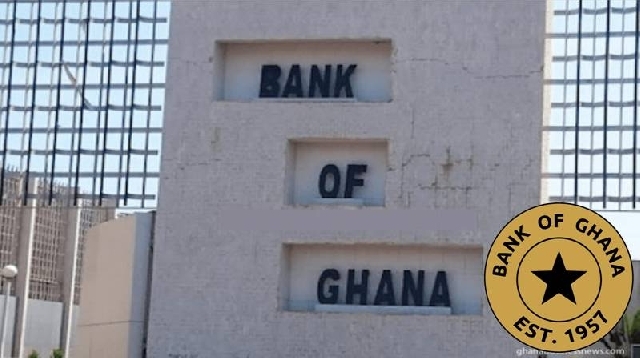 The Bank of Ghana
The Bank of Ghana's kept its benchmark policy rate at 14.7% on Thursday, saying risks to inflation and economic growth were broadly balanced despite rising oil prices and heightened global uncertainty.
The Monetary Policy Committee voted unanimously to maintain the rate, Governor Johnson Pandit Asiama said, as headline inflation rose to 5% in August from 4.6% in July.
The increase was driven mainly by non-food inflation, which rose to 6.8% from 6.1% following adjustments in utility tariffs and higher crude oil prices.
Food inflation, meanwhile, eased marginally to 3% from 3.1%, supported by improved food supply conditions.
Inflation remained below the lower bound of the Bank of Ghana's medium-term target range of 8% plus or minus 2 percentage points.
Core inflation, which excludes energy and utility prices, also eased to 4.2% in August from 4.3% in July, while inflation expectations among consumers, businesses and banks declined.
The central bank said global inflationary pressures had increased significantly since its previous policy meeting, with crude oil prices slightly above $100 a barrel.
Geopolitical tensions and global supply chain disruptions could put further pressure on energy and food prices, while expectations of a strong El Nino weather pattern in the final quarter of the year added uncertainty to the inflation outlook.
Several major central banks have also moved towards tighter monetary policy, potentially raising global borrowing costs and tightening financing conditions for emerging and frontier economies, Asiama said.
Ghana's economy, however, remained resilient
Real gross domestic product grew 6% in the second quarter of 2026, driven mainly by services and industry, compared with 6.6% in the same quarter a year earlier.
The Composite Index of Economic Activity grew 14.9% year-on-year in July, up from 6.1% a year earlier, supported by private-sector credit, international trade and consumption.
Private-sector credit growth accelerated to 35.5% in August from 13.3% a year earlier. In real terms, credit growth was 29%, compared with 1.7% in August 2025.
The average bank lending rate fell to 15.9% in August from 24.2% a year earlier, while the 91-day Treasury bill rate declined to 5.4% from 10.3%.
Ghana's fiscal position also improved, with the overall deficit for the first seven months of 2026 standing at GH¢3.5 billion, equivalent to 0.2% of GDP, against a budget target of GH¢31 billion, or 1.9% of GDP.
The primary balance recorded a surplus of 1.4% of GDP, compared with a target of 0.2%.
The banking sector remained solvent, profitable and liquid, with total assets rising 20.5% year-on-year to GH¢500.2 billion in August.
The non-performing loan ratio fell to 15.7% from 20.8% a year earlier, although the central bank said credit risk remained elevated.
Ghana's external position also strengthened. The trade surplus rose to $8.85 billion in the first eight months of 2026 from $6.69 billion a year earlier.
Exports increased to $22.4 billion from $17.9 billion, driven by gold, cocoa and crude oil receipts, while imports rose 20.8% to $13.58 billion.
Gross international reserves stood at $12 billion as of Sept. 22, equivalent to 4.5 months of import cover.
The central bank said upside risks to inflation included higher utility tariffs, rising petroleum prices and their potential impact on transport fares, a stronger U.S. dollar and global supply chain disruptions.
Fiscal consolidation, improved food supply conditions and exchange-rate stability could help offset those pressures, it said.
The next Monetary Policy Committee meeting is scheduled for November 16 to 18.
Source: classfmonline.com


Trending Business

Patience Akyianu: Former Barclays Bank Ghana MD reported dead
05:14
GPRTU rejects NPA claim that 30% fare increase has been put on hold
19:37
Local refining, traceability, ASM formalisation among reforms GOLDBOD presented to US Treasury team
03:09
2 tenders in 1 week: BoG absorbs ¢21.41 billion ahead of MPC meeting
02:49
Government weighing several options to continue cushioning fuel consumers — NPA CEO
02:28
GRA: AI-driven Customs reforms deliver 'immediate and striking' revenue results
03:48
Bank of Ghana to launch new cedi banknotes in November
18:17
Bank of Ghana holds policy rate at 14.7% as inflation risks rise
20:25
‘Rebuilding reserves will be a key priority’ – BoG Governor after $1.9bn decline
14:55
2026 National Best Farmer to enjoy 7-day all-expenses-paid trip to Italy, receive GHS1.2 million
03:24