
Cabinet approves amendment of Persons with Disability Act – Gender Ministry
News
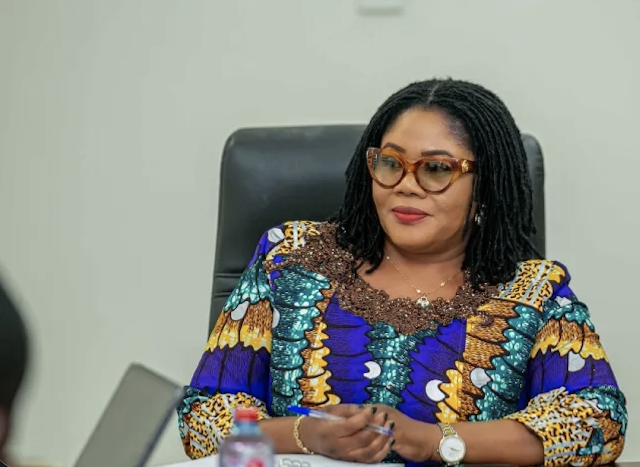 Dr Naa Momo Lartey
Cabinet has approved the amendment of the Persons with Disability Act, 2006 (Act 715), to align Ghana’s disability legislation with the United Nations Convention on the Rights of Persons with Disabilities.
The reform is expected to strengthen the protection of the rights of persons with disabilities and promote greater inclusion in employment, education, technology and social protection.
According to the Ministry of Gender, Children and Social Protection, Naa Momo Lartey, 19,760 persons with disabilities have benefited from the Disability Common Fund across 208 metropolitan, municipal and district assemblies.
The Ministry has also conducted sensitisation programmes on disability-inclusive disaster risk management across 11 regions.
It said 272 graduates with disabilities are currently being formalised into the Ghana Education Service as part of efforts to create employment opportunities for persons with disabilities.
The Ministry, in collaboration with the Ministry of Communication, Digital Technology and Innovation through the Ghana Digital Acceleration Project, has also procured ICT equipment for seven special schools.
The equipment includes desktop computers, laptops, accessible software, Braille displays, embossers and graphic tablets.
Installation has been completed in three schools, with work ongoing in the remaining four.
The beneficiary schools include the Senior High Technical School for the Deaf at Mampong, the Voter School for the Deaf and Blind and the Jowulu Special Needs School, with other beneficiary institutions including schools for the deaf, blind and special needs across the country.
The Ministry said the intervention is aimed at “closing the digital divide for students with disabilities,” particularly those experiencing hands-on access to assistive technology for the first time.
Gender Equality
On gender equality, the Ministry said the implementation framework for the Affirmative Action (Gender Equity) Act is now operational.
It said the Gender Equity Committee and Secretariat required under the law have been established and are functioning, while the accompanying Legislative Instrument (LI) 2522 matured in June 2026.
The Ministry disclosed that 2,321 stakeholders have been sensitised on their obligations under the Act, while 47 institutions, including ministries, metropolitan, municipal and district assemblies, private-sector organisations and other institutions, have submitted compliance reports.
It added that 37 additional sensitisation programmes reached nearly 11,000 people on sexual and gender-based violence, child marriage and harmful cultural practices.
The Ministry said Ghana is moving from advocacy to enforcement, with institutions now legally required to promote gender equity and monitoring mechanisms in place to ensure compliance.
Child Protection and Social Welfare
On child protection, the Ministry said five major bills and policies have advanced through Cabinet this year.
These include the Early Childhood Care and Development Policy, Domestic Violence Policy, Children’s Amendment Bill, Children and Young Persons Justice Administration Bill and the Domestic Abuse Bill.
It said 291 vulnerable children have received care, counselling and education through five residential and subvented homes, while 1,168,278 Ghanaians have been reached through a nationwide child rights awareness campaign.
The Ministry also reported that the Our Child Care Centre supported 16 children, with six transitioning into stable, long-term care.
Support for Survivors
The Ministry said 152 survivors of domestic violence have received counselling, legal and financial assistance.
It has also commissioned a shelter in Accra and supported two others in the Upper West and Eastern Regions as part of plans to establish 16 regional shelters nationwide.
On human trafficking, the Ministry said 1,432 victims received rehabilitation support, while 181 survivors received trauma-informed care at shelters and 69 were referred for further assistance.
It urged survivors of sexual and gender-based violence to seek support through the Orange Support Centre, which provides toll-free and WhatsApp services.
National Household Registry
The Ministry further identified the Ghana National Household Registry as a key component of the country’s social protection system.
It said data collection has now been completed across all 16 regions, covering 2,906,288 households nationwide.
A total of 11,244,027 individuals have been profiled, including 508,870 extremely poor households targeted for social protection interventions.
The Ministry described the registry as a reliable national database for identifying vulnerable households and directing social protection programmes to those who need them most.
It said institutions such as the Ghana Scholarship Secretariat can use the database to identify vulnerable and extremely poor households when implementing support programmes.
The Ministry said the expanded use of the registry is expected to improve targeting, reduce duplication and ensure that social protection interventions reach the intended beneficiaries.


Trending News

Gender Ministry intensifies efforts to protect children at galamsey sites
18:24
CETAG demands independent probe into death of Gbewa College lecturer
23:35
You cannot stop what God has ordained for Bawumia - Ghana Muslim Forum rebukes Rev. Owusu Bempah
14:51
From shelter to self-reliance: Gender Ministry supports domestic abuse survivor
18:22
NaCCA's Chinese curriculum training raises questions amid Mahama's denial of nationwide language policy
23:18
Ghana's Christian-Muslim unity is bigger than Rev. Owusu Bempah's ‘bitterness’ for Bawumia - Ghana Muslim Forum
14:49
Cabinet approves amendment of Persons with Disability Act – Gender Ministry
17:12
Ashaiman police arrest trotro driver and mate for charging illegal transport fares
23:04
NCA clears MTN, Telecel, Goal for next stage of 5G spectrum licensing
05:46
Overdependence on Artificial Intelligence has no future for humanity – Prof. Ato Duncan
17:03
