

South Africa opts out of family values charter over constitutional concerns
News
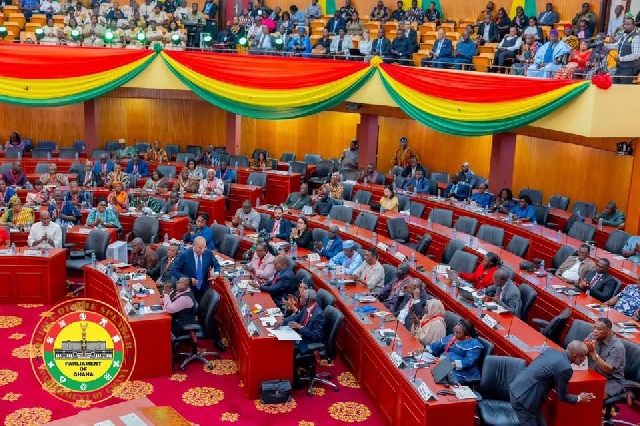 Fourth Inter-Parliamentary Conference on Family, Sovereignty
South Africa has declined to endorse the African Charter on Family, Sovereignty and Values at the Fourth Inter-Parliamentary Conference on Family, Sovereignty and Values currently taking place in Accra, citing constitutional and legal concerns.
The South African delegation said provisions within the proposed Charter, particularly its definition of marriage as a union exclusively between a man and a woman, are inconsistent with the country's constitutional framework and its commitments under regional and international legal instruments.
The position was announced by the head of the South African delegation, Zandile Majozi, during deliberations on Friday, June 5.
According to Ms. Majozi, while South Africa respects the objectives of the conference and the perspectives expressed by participating countries, her country is unable to adopt the Charter because certain provisions conflict with principles enshrined in its Constitution.
She explained that South Africa would therefore reserve its position and opt out of adopting the document.
The development comes amid ongoing discussions at the conference on issues relating to family values, national sovereignty, cultural identity and legislative independence across Africa.
Earlier, Executive Secretary of the National Coalition for Human Sexual Rights and Family Values, Moses Foh-Amoaning, urged African lawmakers to reject arguments linking LGBTQ+ rights to international human rights obligations.
Addressing delegates on Thursday, June 4, Mr. Foh-Amoaning argued that African governments should formulate policies based on their constitutional frameworks, cultural values and national priorities rather than external influences.
He maintained that interpretations of international human rights law frequently cited in support of LGBTQ+ rights remain contested and should be carefully examined by policymakers across the continent.
Mr. Foh-Amoaning also encouraged legislators to remain vigilant in debates surrounding social policy and family values, insisting that African nations must preserve their legislative autonomy when addressing such issues.
The conference has brought together parliamentarians, religious leaders, policymakers and advocacy groups from several African countries to discuss matters relating to governance, family structures, health sovereignty and cultural values.
Discussions are expected to continue as delegates deliberate on policy approaches aimed at strengthening national sovereignty and promoting what participants describe as African-centred development priorities.
Source: Classfmonline.com/Zita Okwang


Trending News

Critics question consistency of Sulemana Braimah’s claims on NLA-KGL partnership
03:21
Vice President NJOA reaffirms support for women-led businesses
21:24
Amin Adam rejects Finance Minister’s claim that IMF programme derailed under Akufo-Addo gov’t
02:36
GMTF seeks global backing as Administrator showcases transformative impact at Ghana–UK Investment Summit in London
12:47
Mahama says anti-LGBTQ+ bill faces further review before becoming law
19:34
NDC Council of Elders orders halt to premature presidential campaigns
03:21
There’s no evidence DRIP machines are being used for galamsey activities – DRIP National Coordinator
13:40
Alhassan Suhuyini hands over modern classroom block to Darul-Ulum Primary School in Kanvili
02:50
Health Ministry summons KATH CEO over suspension of emergency admissions
20:34
W/R: Outgoing Regional Director of Health receives praise from staff and community leaders
02:28
