

“The foundation is strong, and the future is bright” — Ofosu-Adjare outlines Africa’s industrial financing agenda
News
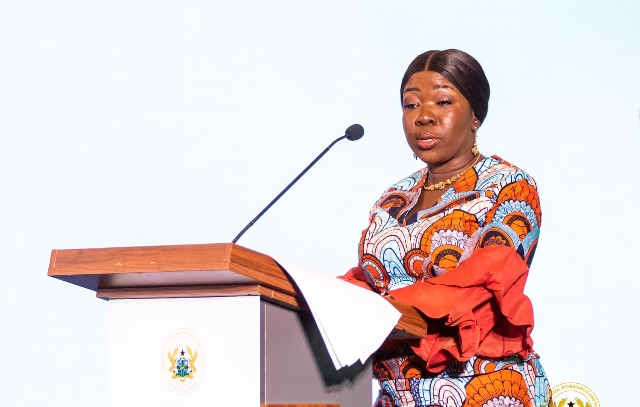 Elizabeth Ofosu-Adjare, Minister of Trade, Agribusiness and Industry
The Minister of Trade, Agribusiness and Industry, Elizabeth Ofosu-Adjare, has called for bold, innovative, and coordinated financing strategies to accelerate Africa’s industrialisation, stressing that the continent stands at a decisive crossroads in its economic development.
Speaking at the Africa Trade Summit 2026, the minister said the decisions Africa makes today will determine whether the continent emerges as a global industrial powerhouse or remains trapped in its traditional role as a supplier of raw materials.
According to data from the IRF Historical New Industrial Policy Observatory, global industrial policy has undergone a significant shift since 2020, with governments worldwide aggressively financing industrial transformation. Between 2009 and 2023, more than 33,000 industrial policy interventions were implemented globally, largely driven by subsidies in both advanced and emerging economies.
“The message is clear: industrial policy is back, and it is being financed aggressively,” she stated, noting that the critical question for Africa is not whether to pursue industrial policy, but how to finance it effectively amid fiscal constraints, competing priorities, and an increasingly protectionist global trading environment.
Lessons from Advanced Economies
The minister outlined key lessons Africa can draw from advanced economies. She noted that countries such as the United States, the European Union, and China have adopted blended financing mechanisms that combine public funding with private sector participation. These approaches target strategic sectors with precision, focus on value chain development, and increasingly emphasise localisation and regional supply chains.
While these policies present challenges to global trade, she said they also create opportunities for deeper African regional integration, particularly under the African Continental Free Trade Area (AfCFTA).
Ghana’s Strategic Industrial Focus
Against this backdrop, the minister highlighted Ghana’s shift towards sector-specific industrial policies supported by innovative financing structures. She explained that Ghana has moved away from generic industrial support to focus on sectors where the country has clear comparative and competitive advantages and the potential to build strong value chains.
One such priority area is the textiles and garments sector, chosen for its strong employment creation potential, regional market opportunities, and value chain integration prospects. With AfCFTA operational and Ghana’s continued access to European Union markets, the country has preferential access to markets representing over 1.5 billion people.
Ghana’s sub-region, she noted, produces some of the world’s highest-quality cotton, offering a strong foundation for integrated production — from raw materials to finished garments. She commended local garment manufacturers such as Dignity DTRT, Accra, Unijail Fashions, and others for their growing capacity and contribution to economic growth.
“The foundation is strong, and the future is bright,” she said.
Automotive and Pharmaceutical Sectors
The minister also underscored Ghana’s strategic focus on automotive components manufacturing, noting that while the country has attracted significant foreign direct investment under its Automotive Development Policy, true industrialisation requires moving beyond assembly to local component production.
She said the global transition to electric vehicles presents a unique opportunity for African countries to enter new value chains without displacing established players. Ghana is positioning itself as a regional hub for automotive components to serve both domestic and export markets.
On pharmaceuticals, the minister said Ghana’s focus is driven by both economic opportunity and health security. Africa currently imports over 70 per cent of its pharmaceutical needs, representing a market valued at $14 billion, projected to grow to $40 billion by 2030.
Ghana, she explained, already has key advantages, including medicinal plant resources and established pharmaceutical firms with good manufacturing practices. However, she acknowledged that limited investment in active pharmaceutical ingredients (APIs) and advanced manufacturing remains a critical gap.
Financing Africa’s Industrial Future
The minister emphasised that Africa’s industrial transformation will require strategic partnerships and smart financing, particularly through blended finance models that leverage limited public funds to mobilise private capital.
She identified institutions such as Afreximbank, the African Development Bank, and the Trade and Development Bank as key partners with the capacity to finance bankable industrial projects, alongside growing interest from bilateral development finance institutions across Europe, Asia, and the Americas.
However, she cautioned that industrial subsidies must be carefully targeted and coordinated across the continent to avoid duplication and destructive competition. In this regard, she stressed the importance of the AfCFTA institutional framework in aligning national industrial strategies for complementary growth.
A Call for Strategic Action
In concluding, the minister said Africa has both the right and responsibility to finance its own industrialisation, citing examples from the United States, the European Union, and China, which all committed substantial public resources to build strategic industries.
“Africa must do so smartly — with clear sectoral strategies, innovative blended finance mechanisms, regional coordination, and a strong commitment to transparency and results,” she said.
She added that African industrialisation should not be seen as charity, but as a major global business opportunity driven by a young population, a growing market of over 1.4 billion people, and strong prospects for sustainable returns.
“The future of Africa’s industrialisation will not be written by others,” she concluded. “It will be written by us —country by country, sector by sector, and value chain by value chain.”
Source: classfmonline.com/Pearl Ollennu


Trending News

Allied health workers at Korle Bu Teaching Hospital threaten to strike on February 4
07:41
Bryan Acheampong to address media ahead of NPP presidential primary
10:35
Obuobia Darko-Opoku leads Mahama Cares to settle GHS210,840 surgery bill for midwife battling brain aneurysm under pilot programme
13:59
NYA hands over pick-ups to NAP coordinators for monitoring
18:07
Majority defends economic turnaround, praises 24-Hour economy vision
03:43
NPP supporter urges delegates to back Bryan Acheampong ahead of January 31 contest
11:52
Bawumia thank supporters in Ashanti region, urges unity ahead of NPP presidential contest
11:03
Bawumia presents NPP best chance of winning 2028 polls – Egyapa Mercer
08:20
Vice President calls for stronger regional cooperation to address emerging security threats
03:39
Bawku: Pro-Bawumia supporters allege threats ahead of Presidential Primaries, call for security intervention
09:56
