

Kojo Oppong Nkrumah slams gov't's 24-Hour Economy law as 'PR stunt,' says it lacks legal muscle
Politics
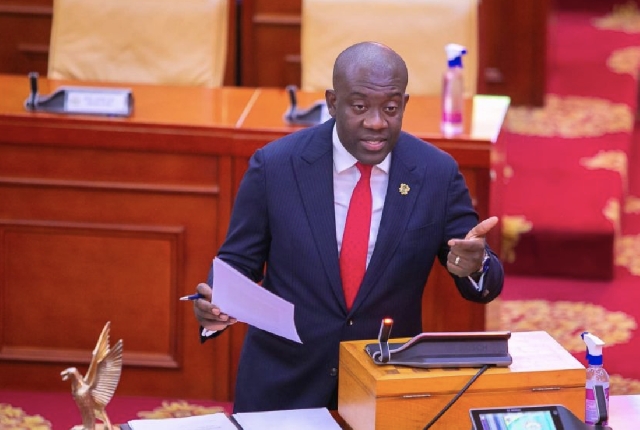 Kojo Oppong Nkrumah (MP)
The Member of Parliament for Ofoase Ayirebi, Kojo Oppong Nkrumah, has cast doubt on the legal strength and practical viability of the government’s much-touted 24-hour economy policy, arguing that the recently passed legislation falls short of compelling institutions or businesses to operate around the clock.
Speaking on Asaase Radio, the Ranking Member on Economy and Development said the law establishes an authority rather than a binding framework to enforce continuous operations.
“The bill they have passed is a 24-hour economy authority bill, not a 24-hour economy bill,” he argued. “Its functions are not connected to delivering a 24-hour work cycle.”
According to him, the structure of the legislation undermines the very promise of a round-the-clock production model.
He further criticised the Majority for rejecting proposed Minority amendments that sought to legally require certain public institutions to implement shift systems.
Oppong Nkrumah described the overall approach as “public relations” rather than substantive reform.
Turning to the broader economic realities, the lawmaker maintained that productivity cannot simply be decreed by policy announcements. Instead, he stressed that output is driven by demand and cost competitiveness.
“Producers don’t just produce because you say so. They produce because there is demand,” he said.
Using rice production to illustrate his point, he noted that many local farmers are struggling to clear their stock as cheaper imports continue to dominate the market, leaving warehouses full and incomes squeezed.
“If you mis-conceptualise the problem, you’ll come up with a solution that doesn’t deliver anything,” he added.
He urged the government to rethink its strategy in upcoming budgets by focusing on structural reforms that reduce production costs, improve competitiveness, and stimulate demand, rather than what he characterised as symbolic interventions.
Source: classfmonline.com


Trending News

“It must work for everyone”: Majority Leader recalls being saved by emergency care, condemns denial to hit-and-run victim
19:33
Edem Kpotosu donates legislative materials to Volta Regional Library
12:53
Mahama Cares Fund expands access to cardiac care with new specialist centres at three teaching hospitals
12:13
Minority raises concern over Ministers’ absenteeism; Majority Leader responds
17:45
Public health: Cement not approved for preserving beans - FDA warns
00:38
Dr. Bryan Acheampong’s campaign team thanks media for support in NPP elections
11:13
Work progresses on Cardiothoracic Centre at Komfo Anokye Teaching Hospital
16:58
COCOBOD to save GHS5 million monthly after management salary cuts
03:44
Police re-arrest suspected killer of officer in Karimenga barrier attack
13:19
Majority Leader demands justice as hit-and-run victim denied life-saving care at 3 hospitals
19:21
