

58.7% of Ghanaians live in urban areas – GSS reveals
News
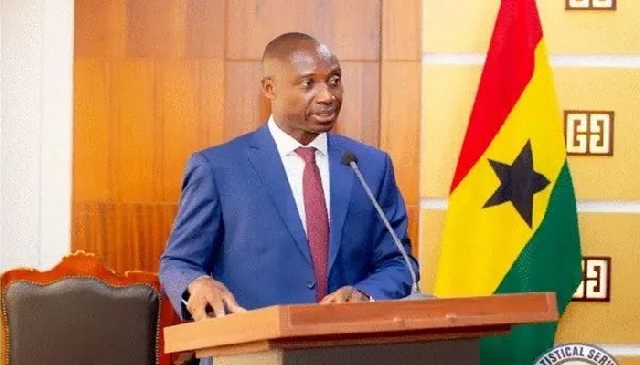 Government Statistician Dr Alhassan Iddrisu
About 19.8 million people, representing 58.7 percent of Ghana’s population, lived in urban areas in 2025, according to the Ghana Statistical Service (GSS).
The figure is contained in Ghana in Numbers, 2025, the new flagship publication of the GSS, which brings together population, housing and basic-service indicators to show how Ghana’s settlement pattern has changed and where local information is needed for planning.
Government Statistician Dr Alhassan Iddrisu said the figures should guide decisions at the level where people live.
“Use local figures, not national averages, to decide where the next cedi goes, because averages hide differences,” he said.
Ghana’s urban population continues to grow
Ghana became more urban than rural in 2010, when 12.55 million people lived in urban areas, compared with 12.11 million in rural areas. By 2021, the urban population had reached 17.47 million, compared with 13.36 million in rural areas.
The 2025 projection puts the urban population at about 19.8 million, or 58.7 percent of the national population. The GSS said the rising number of urban residents makes information on the location of homes, roads, water systems, schools, health facilities, transport and waste services increasingly important.
Housing deficit estimated at 1.8 million units
The 2021 Population and Housing Census counted about 10.0 million dwelling units while the GSS estimated the housing deficit at about 1.8 million units in 2021, down from roughly 2.8 million in 2010.
The report stressed that the deficit is an estimate based on the number of homes required and available. It does not by itself measure housing quality, affordability or the number of vacant homes.
Average household size also fell to 3.6 people, the lowest recorded level. The GSS said smaller households can increase the number of homes needed even when population growth slows.
Basic-service access improves but gaps remain
The share of households with electricity rose from 43.8 percent in 2000 to 86.3 percent in 2021 while improved drinking water increased from 60.7 percent to 92.0 percent over the same period. Improved sanitation also rose from 44.8 percent in 2010 to 69.0 percent in 2022.
Despite the improvements, the report found that 30.8 percent of the urban population lives in slums or informal settlements. About one household in seven still has no electricity, while almost one in three lacks an improved toilet.
The GSS said the indicators show that national access rates and local living conditions need to be considered together.
District data can identify areas of need
Housing and service needs are not evenly distributed across the country, according to the report. District-level figures can identify communities where gaps in housing, water, sanitation, electricity and other services are greatest.
Dr Iddrisu said Ghana’s population statistics should help determine “where schools, clinics and homes must go”. He said decisions should be based on local evidence rather than national averages alone.
Ghana in Numbers, 2025 provides a common reference for tracking urban growth, the estimated housing deficit, settlement conditions and access to basic services.
The publication and related district data are available through the Ghana Statistical Service website, StatsBank, the Ghana in Numbers web portal and the GSS Stats App.
Source: classfmonline.com


Trending News

I believe in nature, giving and evolving to be the best of ourselves - Seidu Agongo
16:50
Increasing public workers' salary by 9% is 'nothing short of an insult' - Minority slams Govt
12:59
Bawumia meets KAS Secretary-General; discusses NPP reorganisation and Ghana's future
11:09
Minerals Commission: Northern Ashanti (Owere) Mines owes $8.33m in unpaid mining fees
18:01
C/R: 3 arrested over murder of 34-year-old mobile money vendor at Kasoa
17:43
NIA arrests 6, sacks 7 over alleged extortion at Galaka registration centre
17:40
Raymond Archer confirmed as substantive EOCO Executive Director
15:16
Breast Cancer: Breast Society leads awareness walk to promote early detection
14:46
Ghana recorded nearly 14,000 new HIV infections in 2025 - AIDS Commission
14:10
Seidu Agongo tells youth to match talent with hard work as 10,000 sewing machine drive begins
14:02