

Low pay making it harder for universities to attract PhD holders — UTAG-UG
Education
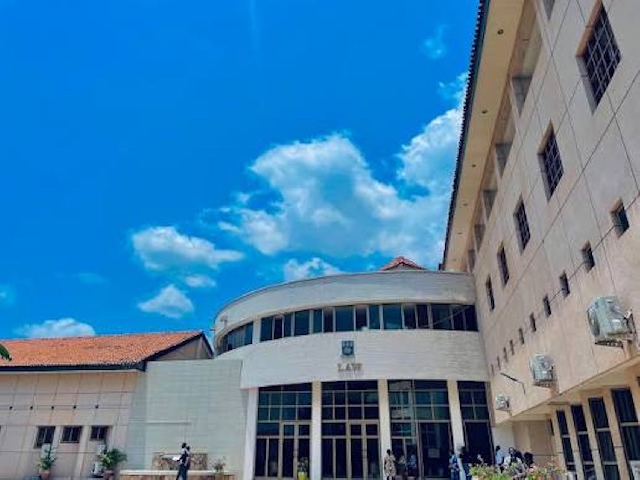 University of Ghana Law School
The University of Ghana chapter of the University Teachers Association of Ghana (UTAG-UG) says poor remuneration is making it difficult for Ghanaian universities to attract highly qualified academics, particularly PhD holders and professionals with specialised industry experience.
UTAG-UG President, Dr Jerry Joe Harrison, said improving lecturers’ conditions of service and strengthening universities’ capacity to train their own academics would be a more sustainable solution to faculty shortages than allowing the Ghana Tertiary Education Commission (GTEC) to take over recruitment.
Speaking on Citi News on Wednesday, September 9, Dr Harrison questioned whether professionals in lucrative fields would leave their careers to pursue PhDs and return to academia when lecturer salaries remain unattractive.
“If you are being paid, you know, the kind of money that lecturers are being paid, which lawyer would want to leave their law practice, go pursue a PhD, and then come back to the classroom and come and teach?” he asked.
He said the challenge also affected disciplines such as medicine, where professional and practical experience is important to academic expertise.
Dr Harrison said universities must maintain high standards when recruiting faculty but noted that rigid requirements could make it difficult to fill vacancies in specialised areas where PhD holders are limited.
He said professional experience should also be considered, particularly in fields where practitioners may be unwilling to leave better-paying careers for academia.
His comments come amid UTAG-UG’s criticism of GTEC over its decision to advertise faculty positions for various public higher education institutions.
UTAG maintains that the recruitment of academic staff should remain the responsibility of individual universities and their established academic and governance structures.
Dr Harrison said GTEC should instead support universities to train more PhD holders in areas where expertise is scarce.
“As an advisor, if an institution is having difficulty recruiting, you could easily help the institution to set up a PhD programme, through which they can channel people who can then come back and help the institution,” he said.
He said this would allow universities to develop a pipeline of qualified academics in specialised areas.
Dr Harrison added that universities already consider national development needs when determining their research and training priorities and could identify areas where additional academic capacity is needed.
“Nothing is wrong with that,” he said.
He maintained that GTEC should focus on its regulatory and advisory mandate rather than taking responsibility for recruiting academic staff.
“We must be guided by the requirements, we must be guided by the availability, we must be guided by the quality of the people that we are receiving,” he said.
Source: classfmonline.com


Trending News

Ebola Alert: Ghana puts stringent measures in place at airport and other entry points
13:32
SA Evacuation Controversy: Okudzeto Ablakwa’s data shows evacuees born in 2034, 2036 and on 31st February
22:35
Villaggio apartment in good shape after parts collapsed - Ayawaso West MCE assures public
12:46
GPCL launches online bookshop for Acts of Parliament, Constitution
21:11
Govt issues further directives on contract mining, protects workers’ conditions
03:15
Bolgatanga Technical University Council Chairman locks up Vice-Chancellor’s office
20:13
Ghana has transparency but lacks accountability – PIAC chair
22:13
Love Ghana Festival to target over 2 million people with medical, social and spiritual outreach
20:07
I have no record of corruption anywhere but Miracles does - Mustapha Gbande fires back at Miracles Aboagye
22:01
Customs intercepts over half a ton of suspected cannabis at Torve, Aflao
18:29
