
Ghana champions cultural diplomacy and regional trade at MOWCA’s 50th anniversary summit
General News
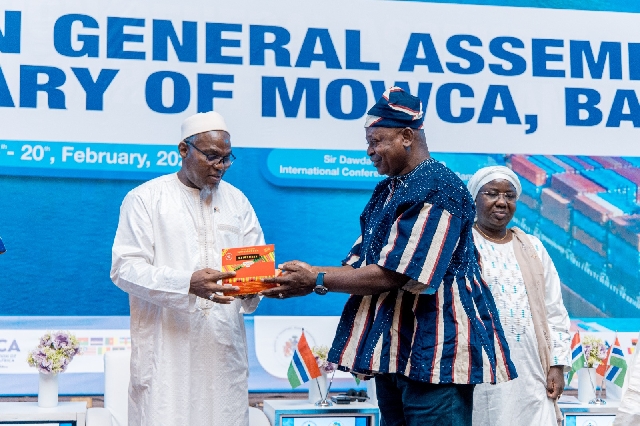 Joseph Bukari Nikpe
In a strategic blend of maritime policy and cultural diplomacy, Ghana’s delegation to the 50th Anniversary of the Maritime Organisation of West and Central Africa (MOWCA) turned the spotlight on the nation’s heritage as a tool for trade in Banjul, The Gambia.
The Minister for Transport, Joseph Bukari Nikpe, alongside the Director General of the Ghana Maritime Authority (GMA), Dr Kamal-Deen Ali, utilised the high-level summit to promote Ghana’s locally woven Fugu traditional wear and premium Ghanaian chocolate, positioning these iconic products as key examples of the value-added trade opportunities available under the African Continental Free Trade Area (AfCFTA).
The celebrations, on the theme “Fostering Effective Civil Services, High Safety Standards, and Low Pollution”, brought together delegates from 20 out of the 25 member states across West and Central Africa.
The discussions underscored that collective action is the only viable path to implementing green port initiatives and adopting the emerging technologies necessary for a resilient maritime transport system.
Established in 1975, the Maritime Organisation of West and Central Africa (MOWCA) is the primary intergovernmental body dedicated to maritime transport in the sub-region.
The organisation unifies 25 member states, stretching from Mauritania to Angola, including 20 coastal nations and five landlocked countries that depend on regional ports for trade.
The summit balanced discussions on urgent security concerns with long-term industrial growth.
The establishment of the Regional Maritime Development Bank was a major point of focus, with member states urging for it to provide sustainable financing for member states to acquire their own vessels, modernise port infrastructure, and build dry docks, reducing reliance on foreign fleets.
The summit also saw The Gambia’s Minister for Transport, Works, and Infrastructure, Ebrima Sillah, taking over the MOWCA Chairmanship from the Minister of Planning, Statistics, and Regional Integration of the Republic of Congo, Ingrid Olga Ebouka-Babakas, for a two-year term.
Member states were encouraged to harmonise policies, pool resources, and strengthen regional institutions to build a more efficient and resilient maritime transport system. Key areas identified for collaboration included green port initiatives, maritime education and training, adoption of emerging technologies, and environmental protection.
Dressed in the distinctive northern Fugu, Mr Nikpe, who delivered a speech on behalf of Ghana’s President, John Mahama, used his address to remind delegates that regional integration is as much about cultural and commodity exchange as it is about shipping lanes.
This “soft power" approach complemented the technical sessions of the 19th Ordinary Session, where Ghana joined other member states in reaffirming a commitment to revitalising MOWCA’s operations and strengthening institutional effectiveness.
The Minister highlighted Ghana’s proactive maritime agenda, noting that national efforts are being bolstered by massive investments in port modernisation and reforms in maritime administration.
“The upcoming coastal transport services designed to link Accra, Lomé, Cotonou, and Lagos, a project being spearheaded by Ghana, is expected to drastically improve connectivity and lower trade barriers across the sub-region”, Mr Nikpe said
He congratulated the newly elected Chairman and emphasised the need for a unified African voice in global maritime governance.
The Director General of the Ghana Maritime Authority, Dr Kamal-Deen Ali, for his part, noted that the advancements being made in coastal water transportation to link the sub-region are supported by a focus on seafarer development and enhanced security coordination to protect the blue economy from emerging threats like piracy and cyber-attacks.
As the global shipping industry pivots toward decarbonization and automation, Dr Ali urged MOWCA member states to harmonise their policies and share collective resources such as technology, funding, and expertise to remain competitive.
Source: Classfmonline.com/Cecil Mensah


Trending News

Safe products don't happen by chance, they are built- FDA boss on World Consumer Rights Day
14:11
Mahama announces public sector pay reforms, declares 2026 transition year
20:54
Adu-Boahene pre-financed national security operations - Prosecution witness
07:32
‘Medical Kalabulle’ report to be submitted to Health Minister today
13:46
Ghana Police Service extends Eid-ul-Fitr greetings to Muslims
14:23
NPA hosts maiden grand Iftar to promote unity and religious harmony
10:23
Ghana boosts local tomato production in response to Burkina Faso export ban
14:04
Gov't to publish power deals as Energy Minister pushes transparency reforms
09:48
Abstaining from Ghana’s UN Slavery Resolution risks ‘wrong side of history’ – PALU warns
14:05
A/R: MP Baafi demands action after NHIA office shutdown in Ejisu
20:46
