

Minority walks out of Supreme Court judge nominees’ vetting
Politics
 Minority
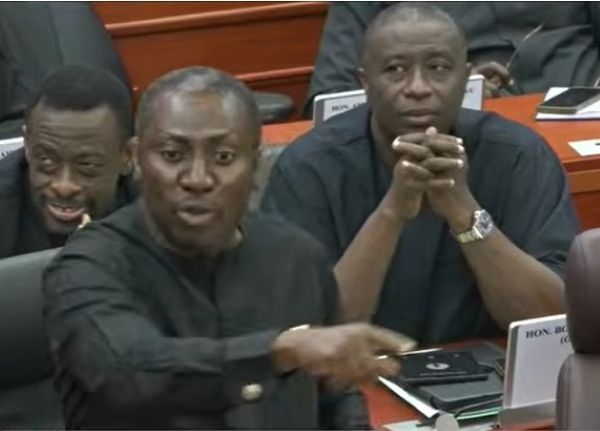
The Minority in Parliament has walked out of the vetting of three Supreme Court nominees after objecting to what it considers an unnecessarily hurried process.
Led by Minority Leader Alexander Afenyo-Markin, the caucus declined to participate in Thursday’s sitting of Parliament’s Appointments Committee, arguing that there was no pressing vacancy on the Supreme Court bench that justified the accelerated timetable.
According to the Minority, the nominees were not being considered to replace vacant positions but rather to expand the existing number of Supreme Court Justices.
It therefore questioned why the nominees could not be subjected to the full parliamentary scrutiny normally associated with appointments to the apex court.
Speaking before the Appointments Committee on Thursday, August 27, Mr Afenyo-Markin stressed that the Minority’s position was not a rejection of the nominees or the vetting process itself.
“These nominations came to the House on Monday. Let us reason together and let us be seen as being consistent with our political views. If you want to follow the precedent, please suspend today’s sitting, properly put out the advert as you requested when you were in opposition, and let us wait for the 14 days,” Mr Afenyo-Markin said.
He said the concern was about the manner in which the exercise was being conducted, particularly the limited time available for Parliament to properly examine the nominees.
The Minority Leader challenged the Majority to explain what significant consequence would arise if the process were allowed to follow the usual parliamentary timelines and procedures.
He argued that the caucus was seeking to protect the integrity of Parliament’s vetting process rather than frustrate the work of the Appointments Committee or cast aspersions on the nominees.
The Chairman of the Appointments Committee, Bernard Ahiafor, however, rejected the Minority’s concerns, describing them as “flimsy,” “hollow” and “baseless”.
Mr Ahiafor maintained that the committee had the mandate to proceed with the vetting and said members who disagreed with decisions of the House had established parliamentary procedures available to them.
“If you are aggrieved by the decision of the House, the method available for you to reverse that decision is contained in our own Standing Orders,” Mr Ahiafor said.
He further disagreed with the argument that the three Supreme Court nominees should be handled differently from other nominees appearing before the committee.
“I will not preside over this committee and purport to vary the orders or directions or decision taken at the plenary by the entire House,” he said.
“It is not done in any democracy, and I will not be the first to introduce it in Ghana’s democracy.”
The exchange ended with the Minority caucus, led by Afenyo-Markin, leaving the chamber and boycotting the vetting.
The three nominees are Justice Sophia Bernasko-Essah, Justice Amoako Asante and former Ghana Bar Association President, Tony Forson.
Source: classfmonline.com/Zita Okwang


Trending News

'Stop insulting people with their disability, private parts, sexuality, looks' – Agyinasare
18:56
Fire engulfs central market in Kumasi; leaves traders stranded
14:28
Stop teaching our youth to insult! - Agyinasare to politicians
21:44
Melcom Care Foundation donates 1,000 meals to five orphanages and Accra Rehabilitation Centre
22:53
Agyinasare: Journalism must inform, educate, entertain not insult
18:54
GRA debunks extortion claims over GH¢807 airport Customs duty
17:50
AIT President urges graduates to embrace lifelong learning in AI era
15:38
Gov’t suspends ban on preaching, hawking in moving vehicles
22:55
Forestry Commission marks World Tourism Day 2026 with smart eco-tourism exhibition
15:48
Mahama begins two-day Ahafo working visit as part of ‘Resetting Ghana’ tour
14:23
