

BoG confirms GH¢34.9bn comprehensive loss for 2025
Business
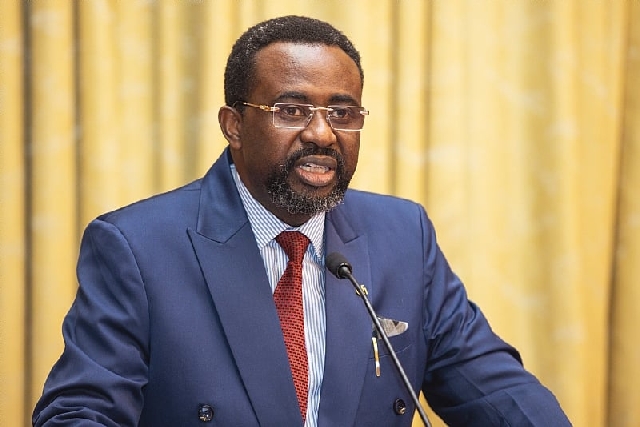 Bank of Ghana Governor Johnson Pandit Asiama sitting with stakeholders
The Bank of Ghana has confirmed that its total comprehensive loss for the 2025 financial year reached GH¢34.9 billion, validating claims previously raised by the Minority Caucus in Parliament.
The acknowledgement follows weeks of political debate over the true extent of the central bank’s financial position, with the Minority insisting that the losses extended far beyond the GH¢15.63 billion operating deficit initially highlighted by government communicators and Majority MPs.
Led by Kojo Oppong Nkrumah, the Minority argued that an additional GH¢19.32 billion recorded under Other Comprehensive Income (OCI) should also be included when assessing the Bank’s total losses.
In an explanatory statement on its 2025 financial accounts, the central bank confirmed that it recorded an operating loss of GH¢15.63 billion alongside an OCI loss of GH¢19.32 billion, bringing the total comprehensive loss to approximately GH¢34.95 billion.
The confirmation marks a significant development after earlier disagreements between both sides over the interpretation of the figures contained in the Bank’s audited financial statements.
Government officials and Majority members had maintained that the OCI losses were largely accounting adjustments linked to the appreciation of the cedi and therefore should not be treated as direct operational losses.
However, the Minority insisted that the full financial impact on the institution could only be properly understood by combining both figures.
During a press briefing in Parliament, Kojo Oppong Nkrumah argued that attempts had been made to create the impression that the Bank’s losses were significantly lower than the actual amount recorded in the accounts.
The opposition caucus further alleged that gains from gold sales were used to soften the appearance of the losses. According to them, the Bank recorded about GH¢9.57 billion from gold reserve sales, which helped reduce the headline deficit.
Explaining the losses, the Bank said the operating deficit was mainly driven by the cost of Open Market Operations (OMO), which were intensified to absorb excess liquidity as part of efforts to curb inflation and stabilise the cedi.
It also cited costs associated with the Domestic Gold Purchase Programme, particularly exchange rate differences between official central bank rates and prevailing market rates used in transactions with artisanal miners.
On the GH¢19.32 billion OCI loss, the Bank explained that the figure resulted from exchange and revaluation losses on foreign reserve assets following the sharp appreciation of the cedi during 2025.
According to the Bank, the cedi strengthened from GH¢14.70 to the dollar in 2024 to GH¢10.45 in 2025, reducing the cedi value of its foreign currency assets, gold holdings, and Special Drawing Rights.
Despite the worsening negative equity position, which rose from GH¢61.32 billion to GH¢96.28 billion, the Bank maintained that it remains financially capable of carrying out its core mandate.
The central bank further argued that the losses should be viewed against broader economic improvements recorded in 2025, including inflation declining from 23.8 percent to 5.4 percent, a stronger cedi, and increased gross international reserves from US$9.11 billion to US$13.83 billion.
The issue has reignited political debate over the financial health of the central bank, with the Minority insisting the latest clarification confirms that the institution’s total losses for 2025 were close to GH¢35 billion rather than the narrower operating loss figure previously emphasised.
Source: Classfmonline.com/Zita Okwang


Trending Business

GOLDBOD Taskforce curbs illegal gold trade, boosts forex inflows
00:14
Damang: Gold mine deal prompts calls for stronger industry support for Ghana’s gold reserves
03:30
BoG calls for stronger collaboration to deepen Africa’s Fintech growth
12:36
BoG confirms GH¢34.9bn comprehensive loss for 2025
08:28
Akwasi Oppong-Fosu to address industrial transformation at Ghana Female CEO Summit 2026
04:04
Ghana inflation edges up to 3.4% in April 2026 as service costs surge
01:55
Tema Oil Refinery participates in offshore technology conference 2026
10:14
Ghana delegation meets WTO chief in Geneva to advance inclusive trade agenda
07:06
Ghana signs agreement to boost gas production under OCTP project
02:21
Air Ghana expands regional fleet with third Boeing 737-400 freighter
04:15