
NPA cuts fuel price floors ahead of July pricing window
Business
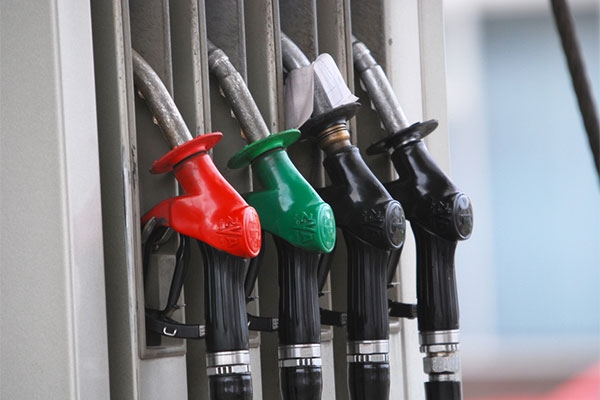 Fuel pumps
Petrol, diesel and liquefied petroleum gas (LPG) price floors have been reduced significantly ahead of the first pricing window of July, paving the way for lower pump prices if Oil Marketing Companies (OMCs) pass on the reductions to consumers.
An industry notice shows that the National Petroleum Authority (NPA) has set the petrol price floor at GH¢12.79 per litre for the first pricing window of July, down from GH¢13.39 per litre during the second pricing window of June.
The reduction of GH¢0.60 per litre represents a 4.5 per cent decrease.
Diesel recorded a larger reduction, with the price floor falling from GH¢15.11 per litre to GH¢13.54 per litre, a decrease of GH¢1.57 per litre, or 10.4 per cent.
The LPG price floor has also been reduced from GH¢13.23 per kilogram to GH¢10.11 per kilogram, representing a decline of GH¢3.12 per kilogram, or 23.6 per cent.
The price floors represent the minimum prices at which OMCs and LPG Marketing Companies (LPGMCs) are permitted to sell petroleum products during the pricing window.
Under the Petroleum Products Pricing Guidelines (PPPG), all OMCs and LPGMCs are required to comply with the prescribed price floors throughout the pricing window.
However, the published price floors do not include premiums charged by International Oil Trading Companies (IOTCs), the operating margins of Bulk Import, Distribution and Export Companies (BIDECs), or the margins of marketers and dealers.
These cost components are determined independently by the respective companies in accordance with the PPPG, meaning actual pump prices may differ from the published price floors.
The latest reductions follow a decline in global crude oil prices to around US$70 per barrel, reversing much of the increase caused by the recent conflict in the Middle East.
If passed on to consumers, the lower price floors are expected to reduce pump prices and provide some relief for motorists, transport operators, businesses and households.
Lower fuel prices could also help ease transport and logistics costs, contributing to lower inflationary pressures and supporting economic activity following recent increases in petroleum prices.
Source: classfmonline.com


Trending Business

Dr Papa Kwesi Nduom: We are exploring acquisition of Standard Chartered Ghana retail business
03:29
NPA cuts fuel price floors ahead of July pricing window
02:15
Insurance brokers advise flood victims to document damage before filing claims
20:29
GRA assures businesses of service continuity amid heavy rains
20:30
Volta Regional Representative on Council of State courts US investors, promotes Ghana and region at business exchange forum in Chicago
14:45
$11.5b in prospective investments pledged for Mahama’s 24-Hour Economy programme
14:17
TUC warns of possible strike over alleged unequal public sector salary adjustments
02:27
Government applies for Bank of Ghana licence for Women’s Development Bank
18:06
BoG calls for responsible journalism to protect economy and national security
17:56
Tricycle Operators’ Association to stage nationwide protest over closure of dump site
16:52
