

COCOBOD CEO dismisses claims Cocoa Bill will ban inter-cropping
News
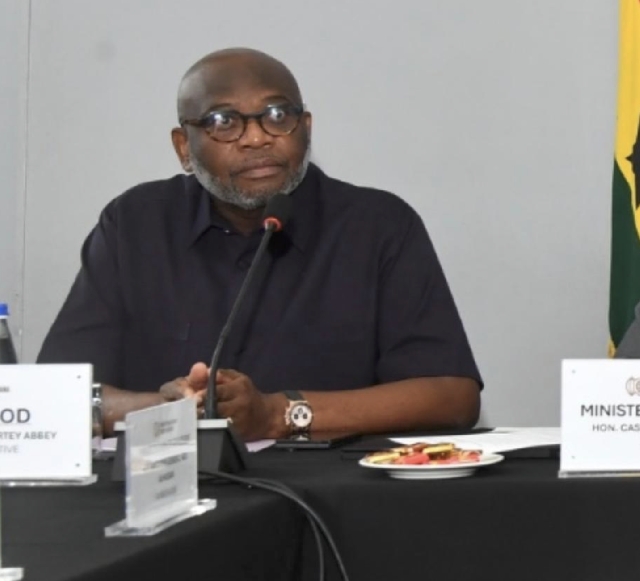 Chief Executive Officer of the Ghana Cocoa Board (COCOBOD), Dr Randy Abbey,
The Chief Executive Officer of the Ghana Cocoa Board (COCOBOD), Dr Randy Abbey, has dismissed claims that the proposed Cocoa Board Bill 2026 will prevent cocoa farmers from growing food crops alongside their cocoa trees.
Dr Abbey described the claims as misinformation, insisting that the proposed legislation is intended to protect cocoa farms from destruction and address longstanding challenges within the industry.
Speaking on the proposed legislation, he said the Bill was developed in response to concerns including the destruction of cocoa farms, financial difficulties, weak controls at COCOBOD, limited local processing and inadequate earnings for farmers.
He explained that the Bill would require authorisation before cocoa trees are destroyed, uprooted, damaged or felled, except where such activities form part of an approved rehabilitation programme.
According to Dr Abbey, stronger protection has become necessary as cocoa farms continue to come under pressure from illegal mining, logging and real estate development.
He said COCOBOD regularly receives complaints from farmers whose farms have allegedly been destroyed for such activities.
“Every single week, I receive petitions from farmers who come complaining that their cocoa farms are being destroyed for one activity or the other,” he said.
Dr Abbey stressed that the proposed restrictions are focused on preventing the destruction of cocoa trees and should not be interpreted as a prohibition on intercropping or other approved farming practices.
He accused some individuals and groups of deliberately misrepresenting the contents of the Bill and warned that such misinformation could undermine efforts to reform the cocoa sector.
The proposed legislation also seeks to tighten financial management at COCOBOD by requiring greater compliance with the Public Financial Management Act.
Dr Abbey said the measures are intended to strengthen financial controls and prevent decisions that could expose the cocoa industry to serious financial risks.
The Bill further proposes a new cocoa pricing mechanism under which farmers would receive 70% of the gross free-on-board value of cocoa.
Producer prices could also be adjusted in response to developments in international cocoa markets.
According to Dr Abbey, the proposed framework would allow farmers to benefit more when global cocoa prices increase while helping to limit financial exposure when prices decline.
He described the Bill as the most significant proposed reform of Ghana’s cocoa sector since the 1984 legislation.
Dr Abbey said the broader objective is to strengthen the financial sustainability of COCOBOD, improve returns and welfare for farmers, expand domestic cocoa processing and support industrialisation across the cocoa value chain.
Source: Classfmonline.com/Zita Okwang


Trending News

Joseph Esibu elected NPP Central Regional Chairman
20:38
Pre-Teacher unions reject Fair Wages’ call to wait for new emoluments commission, sets Sep. 7 to strike
09:32
Asokwa Assembly rolls out major infrastructure push in health, education, sanitation
15:24
Local Govt Minister calls for dedicated budget to strengthen Regional Coordinating Councils
12:10
Abronye DC retains NPP Bono East chairmanship with 201 votes
20:30
'Move out now': Energy Minister Jinapor warns encroachers as fuel tanker explosion damages Tema-Achimota power line
11:26
Afenyo-Markin - NPP must learn from NDC's ability to unite despite personal differences else stay in opposition
15:18
LMWG commends government over Adamus revocation, demands Adamus pay state debts
04:30
Anti-corruption drive: Passport staff to receive special bonus for ‘impressive output’ — Ablakwa
20:20
COCOBOD CEO dismisses claims Cocoa Bill will ban inter-cropping
08:14