

Deputy Energy Minister Richard Gyan-Mensah details Ghana’s $1.47b power sector reforms at APUA meeting
News
 Richard Gyan-Mensah
The Deputy Minister for Energy and Green Transition, Richard Gyan-Mensah, has highlighted Ghana's significant progress in reforming its power sector, describing sound governance, financial sustainability and strategic investment as critical to achieving reliable electricity supply across Africa.
Speaking at the opening of the 60th Annual Meetings of the Association of African Power Utilities (APUA) and the CEO Governance and Leadership Forum in Accra, Gyan-Mensah said Ghana was honoured to host the gathering of African energy leaders whose decisions would shape the future of electricity for more than 1.4 billion people on the continent.
He noted that the forum's focus on governance, market integration and strategic partnerships aligns with Ghana's ongoing efforts to transform its electricity sector.
The Deputy Minister said Ghana has made remarkable strides in expanding electricity access, which now stands at approximately 89 percent. He added that the country has an installed generation capacity of more than 5,300 megawatts, with dependable capacity of about 4,700 megawatts, while the national transmission network maintains an availability rate of over 99.5 percent.
According to him, these achievements have translated into improved livelihoods by powering businesses, supporting healthcare delivery and driving industrial growth.
He attributed the progress to major financial reforms undertaken by government, including the settlement of about US$1.47 billion in legacy debts owed to Independent Power Producers and fuel suppliers. He said government also secured nearly US$500 million in savings through the renegotiation of power purchase agreements, restored the US$500 million World Bank Partial Risk Guarantee for the Sankofa Gas Project, and strengthened the Cash Waterfall Mechanism, increasing declared sector payments from GH¢6 billion to more than GH¢15 billion.
He said the reforms are restoring investor confidence and creating a stronger financial foundation for the country's power utilities.
The Deputy Minister commended key institutions within the energy sector for driving the transformation. He said the Volta River Authority currently provides nearly 2,550 megawatts of electricity through its hydro, thermal and renewable energy portfolio, while GRIDCo continues to modernise the national transmission network with advanced digital technologies across more than 5,100 kilometres of high-voltage infrastructure.
He added that the Electricity Company of Ghana (ECG) and the Northern Electricity Distribution Company (NEDCo) are expanding electricity access and deploying smart technologies to improve efficiency, while the Energy Commission and the Public Utilities Regulatory Commission continue to strengthen regulation and market governance.
On Ghana's transition to cleaner energy, Hon Gyan-Mensah disclosed that renewable energy capacity has increased from about 205 megawatts to 283 megawatts. He announced that implementation is progressing on the country's first competitively procured 200-megawatt Battery Energy Storage System with Solar PV Charging Plant, alongside a 200-megawatt utility-scale solar project.
He stressed that domestic natural gas production, supported by the Offshore Cape Three Points (OCTP) project, continues to provide the stable generation capacity needed to integrate more renewable energy into the national grid while maintaining reliability.
The Deputy Minister called on African power utilities to prioritise financial discipline, competitive procurement, digitalisation and cybersecurity to build resilient electricity systems. He also underscored the importance of regional collaboration through the West African Power Pool and the emerging African Single Electricity Market to improve reliability and attract greater investment into the continent's energy sector.
Gyan-Mensah reaffirmed Ghana's commitment to sharing its experiences in power sector reforms, battery storage deployment, grid modernisation and regional electricity trade while learning from other African countries.
He urged participants at the forum to provide bold leadership and innovative solutions, saying Africa's energy future would be determined not only by the number of megawatts generated but by effective governance, investment mobilisation and stronger continental cooperation.


Trending News
GWL apologises for supply disruption after nationwide power outage
15:29
2026 Mid-Year Budget Review Debate: Minority questions GH₵4.5 billion GOLDBOD transfer
16:16
Judges are in an ‘ambulance mood’ to jail politicians - Atta Akyea
12:30
'Ghana faces GH¢111 billion DDEP repayment burden next 2 years; This is the real Agenda 111' - Ato Forson
14:38
Mid-Year Budget Review: Prices of Okro, fish, garden eggs, others ‘reduced’ - Ato Forson says
21:45
University of Ghana School of Law wins Supreme Court 150th anniversary ‘Moot Court’ competition
17:36
Interior Minister eases motorbike restrictions for women in Bawku
15:26
Ghanaians will keep traveling to dangerous places abroad until we solve our unemployment situation - Broadcaster Charles Akrofi
14:34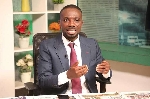
Even if fuel comes to GH¢4 and the dollar is GH¢1 in 2028, NDC will still lose power - Dennis Miracles Aboagye
12:46
Bloggers Association calls for due process, free expression after content creators' arrests
13:39