
Mahama to table UN Resolution declaring Transatlantic Slave Trade ‘gravest crime against humanity’
News
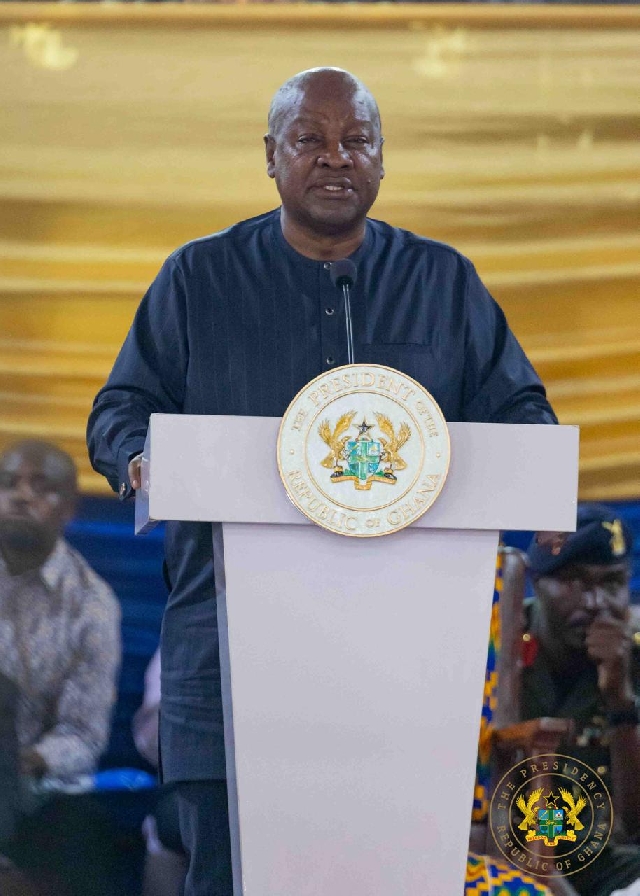 President JD Mahamae
President John Dramani Mahama is set to table a landmark resolution at the United Nations General Assembly seeking to formally declare the Transatlantic Slave Trade as the gravest crime against humanity.
The resolution is scheduled for consideration and possible adoption on March 25, 2026—marking the International Day of Remembrance of the Victims of Slavery and the Transatlantic Slave Trade.
According to Ghana’s Ministry of Foreign Affairs, the move follows President Mahama’s pledge during his address to the UN General Assembly last year and forms part of broader global efforts toward justice, recognition, and historical accountability.
Ghana, acting in its role as the African Union’s Champion on Reparations, is leading the initiative in collaboration with the African Union and the Caribbean Community, alongside stakeholders representing people of African descent worldwide.
If adopted, the resolution would formally recognise the trafficking of enslaved Africans and racialised chattel enslavement as the gravest crime against humanity, citing its scale, duration, systemic nature, brutality, and enduring global consequences.
Officials say the declaration would mark a historic milestone as the first comprehensive UN resolution on slavery and the Transatlantic Slave Trade in the organisation’s 80-year history. It is expected to reinforce calls for reparatory justice, accountability, and global healing, while preserving historical truth as a foundation for reconciliation.
The initiative also seeks to spotlight how the legacy of slavery continues to shape modern socio-economic inequalities, including development disparities, debt imbalances, climate vulnerability, and inequities in global financial systems.
Ahead of the UN session, a series of commemorative and high-level events will be held in New York. These include a wreath-laying ceremony at the African Burial Ground National Monument on March 24, followed by a high-level forum on reparatory justice at the UN.
Following the anticipated adoption, Ghana is expected to intensify advocacy for reparatory justice under the African Union’s Decade of Action on Reparations and African Heritage (2026–2036).
The Ministry of Foreign Affairs expressed appreciation to key partners, including the African Union Commission, UNESCO, CARICOM, the Community of Latin American and Caribbean States, and various experts and institutions that contributed to drafting the resolution.
Ghana has also called on all UN Member States to support the resolution, urging them to stand “on the right side of history and justice” in recognising one of humanity’s most enduring injustices.
Source: classfmonline.com


Trending News

MPs call for stricter safety measures after fatal Tema aircraft crash
17:56
EPA urges Ghanaians to embrace recycling on Global Recycling Day
00:58
Brothers die in fatal microlight aircraft crash in Tema
10:55
Parliament approves GH¢8.7bn for DACF in 2026 Budget
18:33
‘If you can buy a jet but not pay farmers, the jet will vote for you’ – Minority to NDC gov’t
19:26
Annoh-Dompreh, Dr Yaw Opoku lead week-long Minority visit to cocoa farmers in Ashanti Region
07:51
Parliament passes bill making presidential charter optional for private universities
17:14
Ghana Free Zones Authority donates GHS300,000 to support “Heal Ghana Month” campaign
08:58
Government begins nationwide registration of small-scale miners
17:44
Accra gets new public waste bins as AMA steps up clean-up efforts
00:42