
UN: Global governance system fundamentally unbalanced — VP Naana Jane Opoku-Agyemang
News
 Prof Naana Jane Opoku-Agyemang
Vice President Professor Jane Naana Opoku-Agyemang has criticised the international geopolitical architecture, branding the current system of global governance as fundamentally unbalanced.
Addressing the Oxford Africa Conference 2026 on Saturday, May 16, 2026, the vice president argued that the systemic exclusion of African nations from critical decision-making tables undermines the democracy Western institutions claim to champion.
Speaking at the Andrew Wiles Building of the University of Oxford, Professor Opoku-Agyemang tied the credibility of institutions like the United Nations directly to their willingness to reform, referencing the decades-long lobby by African leaders for permanent seats on the UN Security Council.
The vice president noted that the continent's patience with this diplomatic stagnation is wearing thin, stating: “If institutions and democracy are to remain legitimate, they must remain responsive to contemporary realities.
“For many African states, the continued absence of meaningful African representation within key global decision structures, particularly, the United Nations Security Council remains a source of growing imbalance between the distribution of global power and the structures through which that power is exercised. But legitimacy is shaped beyond representation. It is also shaped by outcomes.”
Economic Disparities and Financial Barriers
Expanding her critique to global economics, the vice president stressed that representation inside the UN chamber is meaningless if the international financial architecture remains rigged against developing markets.
She highlighted the economic headwinds facing African nations, pointing specifically to high sovereign borrowing costs and restricted access to international capital.
According to her, these systemic financial barriers severely constrain the ability of sovereign governments to stimulate domestic economic growth, build infrastructure, and reduce poverty.
The Oxford Africa Conference
The two-day summit, running from May 16 to 17, 2026, marks the 16th edition of the conference. Organised by the student-led Oxford University Africa Society, the annual gathering draws together academics, policymakers, corporate leaders, and development experts.
This year’s conference is themed “Anchoring Africa: Grounded Leadership in the Age of Disruption.”
Against a backdrop of technological shifts, climate vulnerabilities, and macroeconomic trends, speakers are tasked with charting a self-reliant path forward for the continent.
Through keynote addresses, panel debates, fireside chats, and policy dialogues, the forum aims to implement practical, Africa-centred solutions. For Professor Opoku-Agyemang, that progress begins with a global system that treats the continent as an equal partner.
Source: classfmonline.com


Trending News

House of Chiefs proposes moving under Presidency to safeguard constitutional independence
00:55
Ghana Gas CEO pays courtesy call on GFZA to deepen strategic partnership
12:18
Assemblies of God’s Rev. Andrews Nelson Awintia loses father
17:29
Roads Minister inspects 'Big Push' projects in Upper West and Upper East Regions
14:05
Ghana police service announces national campaign against child abuse
16:49
Ablekuma West Municipal Assembly demolishes crime-prone ghettos in security crackdown
02:00
Police denies allegation of malpractice in promotional examinations
08:56
GRASAG local executives demand immediate payment of delayed graduate student bursaries
15:40
Police arrest East Legon resident over alleged online sexual exploitation
16:44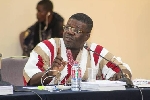
Ghana School of Law entrance exam abolished: Rockson-Nelson Dafeamekpor
01:56
