
Don't make 'flawed water contracts' Ghanaians' burden by imposing higher water tariffs - Ghana Water Justice Network warns Govt
News
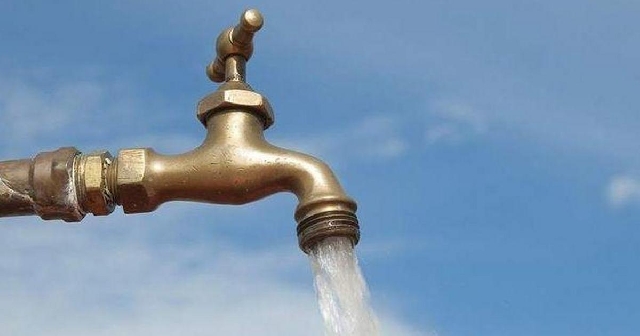 Water flowing from a pipe
The Ghana Water Justice Network is demanding an independent investigation into the Teshie-Nungua Desalination Plant contract following an international arbitration award of approximately US$235 million against Ghana Water Limited with the Republic of Ghana also held liable under a state guarantee.
The group’s chairman, Geoffery Ocansey, addressing the press, called on the government to prevent consumers from bearing the cost of the award through increased water tariffs and suspend further water privatisation deals pending an independent policy review.
The Teshie-Nungua Desalination Plant was developed to improve water supply to communities in Accra under a public-private partnership between Ghana Water Limited and Befesa Desalination Developments Ghana Limited.
The facility, which began commercial operations in 2015, was designed to produce 60,000 cubic meters of treated water daily to serve an estimated 500,000 people.
The project was developed under a build-own-operate-transfer arrangement with an estimated cost of US$125 million and a 25-year concession period.
However, the plant was shut down in October 2025 amid unresolved contractual disagreements and maintenance concerns, affecting a key source of water for communities along Accra’s eastern coastal corridor.
The dispute over the water purchase agreement subsequently led to arbitration proceedings before the International Chamber of Commerce.
In September 2026, the tribunal awarded approximately US$235 million in termination-related payments to Befesa Desalination Developments Ghana Limited and Standard Bank of South Africa Limited following the termination of the water purchase agreement.
The Republic of Ghana was also held liable under the state guarantee backing the project.
The tribunal dismissed a separate claim of approximately US$402 million for alleged unpaid water charges after determining that the contractual claims could not be recovered cumulatively.
The Ghana Water Justice Network says the award raises serious questions about the financial risks associated with the project and whether it delivered value for money.
Figures cited by the group from the Ministry of Finance’s 2024 Annual Report on Public-Private Partnership projects indicate that the plant supplied approximately 15.74 million cubic meters of water against a contracted annual volume of 21.9 million cubic meters.
The group also cited government support to Ghana Water for the project amounting to approximately US$57.38 million between 2020 and 2024 with about US$9.77 million outstanding at the end of 2024.
Approved tax exemptions reportedly totaled US$72.83 million, of which US$31.55 million had been utilized.
“These commitments demand scrutiny of the project’s overall value for money,” the network stated.
The group is therefore calling for the publication of the water purchase agreement, its amendments, the state guarantee and relevant arbitration findings, subject to legitimate legal restrictions.
It is also demanding an independent public investigation into the project and accountability for any proven wrongdoing.
The network has further raised concerns about the government’s proposed acquisition of the facility, insisting that any takeover must be supported by independent financial and technical assessments.
It wants the assessments to establish the plant’s current condition, rehabilitation costs, realistic operating performance, purchase value and the implications of any acquisition agreement for the state’s arbitration liabilities.
While acknowledging the importance of restoring reliable water supply, the group warns that the acquisition must not impose another avoidable financial burden on taxpayers.
“The consequences of flawed water sector contracts must not be passed on to households through higher water tariffs. Water is essential to health, dignity and livelihoods,” the group said.
The Ghana Water Justice Network also demands the government to suspend further water privatisation and similar high-risk public-private partnership commitments pending an independent policy review.
It urged the government to prioritise public investment, accountable management and meaningful participation by workers, communities and consumers in decisions affecting the water sector.
“The Teshie-Nungua experience is a national warning,” the group stated, arguing that the public must not bear disproportionate contractual risks while receiving inadequate benefits.
It maintains that water is a public good and a human right and that its affordability, quality and accessibility must take precedence over private financial returns.


Trending News
NACOC confirms arrest of Syrian national with 40kg suspected cocaine in Beirut
04:15
Javits Frimpong: Ghana officials visit father of 15-year-old shot dead in New York
04:01
I believe in nature, giving and evolving to be the best of ourselves - Seidu Agongo
16:50
Increasing public workers' salary by 9% is 'nothing short of an insult' - Minority slams Govt
12:59
Bawumia meets KAS Secretary-General; discusses NPP reorganisation and Ghana's future
11:09
Minerals Commission: Northern Ashanti (Owere) Mines owes $8.33m in unpaid mining fees
18:01
C/R: 3 arrested over murder of 34-year-old mobile money vendor at Kasoa
17:43
NIA arrests 6, sacks 7 over alleged extortion at Galaka registration centre
17:40
Moree fishermen question effectiveness of closed season
15:22
Raymond Archer confirmed as substantive EOCO Executive Director
15:16