

OSP moves to overturn High Court ruling on prosecutorial powers
News
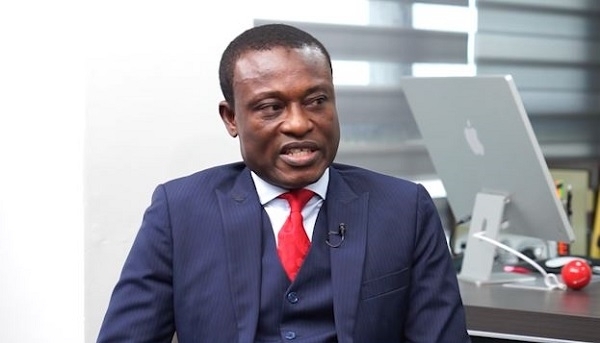 Kissi Agyebeng, OSP boss
The Office of the Special Prosecutor (OSP) has announced plans to overturn a recent High Court ruling which held that the anti-corruption body lacks independent authority to prosecute criminal cases.
In a statement posted on its official Facebook page on Wednesday, April 15, the OSP described the ruling as legally flawed and argued that the court exceeded its constitutional mandate.
“The OSP states that it is taking steps to quickly overturn the decision of the General Jurisdiction Court since the High Court does not have jurisdiction to, in effect, strike down parts of an Act of Parliament as unconstitutional,” the statement said.
The OSP further stated that only the Supreme Court has the authority to declare provisions of an Act of Parliament unconstitutional.
“It is only the Supreme Court which can strike down parts of an Act of Parliament as unconstitutional,” it added.
The response follows a ruling by the High Court in Accra on Wednesday, presided over by Justice John Eugene Nyadu Nyante.
The court held that while the OSP has the authority to investigate corruption-related offences, it does not have constitutional power to independently initiate prosecutions. The ruling cited Article 88 of the 1992 Constitution, which vests prosecutorial authority in the Attorney-General’s Department.
The case was initiated through an application for quo warranto filed by private citizen Peter Achibold Hyde, who challenged the legal basis of the OSP’s prosecutorial powers.
The ruling has created uncertainty over ongoing corruption cases being handled by the OSP, with legal observers noting potential delays pending further judicial clarification.
In its statement, the OSP maintained that its enabling law empowers it to investigate and prosecute corruption-related offences, and warned that the ruling could undermine anti-corruption efforts and institutional accountability.
The situation is further complicated by a separate case pending before the Supreme Court, which is also challenging the OSP’s prosecutorial authority.
That case was filed by private citizen Noah Ephraem Tetteh Adamtey, who is seeking a constitutional interpretation of whether Parliament acted within its powers in granting independent prosecutorial authority to the OSP.
The Attorney-General has reportedly aligned with the central argument of the plaintiff in that case, maintaining that provisions allowing the OSP to prosecute without the Attorney-General’s authorisation may be inconsistent with Article 88 of the Constitution.
Legal analysts say the combined cases could have significant implications for the mandate of the OSP and Ghana’s anti-corruption framework.
Source: classfmonline.com


Trending News

N/R: IGP deploys reinforcement team and armoured vehicles to Gushegu and Karaga
20:19
NYA distributes tools to apprentices and master craftspersons in Weija Gbawe
17:38
Learn from Ghana, youth development must not be an afterthought - Osman Ayariga to other nations
06:01
Pastor, two others arrested over alleged attempt to bury infant alive in Abofremu
10:41
Police arrest woman over viral video in uniform
16:46
Musah Ziyad maintained as AMA Presiding Member after completing predecessor’s unexpired term
08:20
Dr Apaak cuts sod for GHS41 million educational projects in Builsa South
14:18
Ghana becomes first beneficiary of France’s National Health Platform after Macron–Mahama talks
17:47
Prof. Paul Nkegbe rejects Vice Chancellor speculation, demands retraction
13:57
We don’t take our health needs seriously – Akandoh calls for attitudinal change
15:24
