
Parliament raises concern over continued detention of Manhyia South MP
News
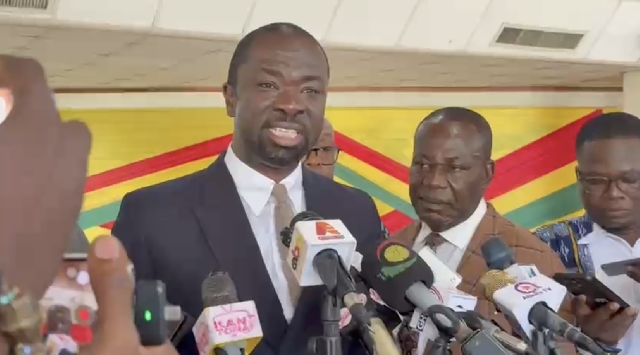 Nana Agyei Baffour Awuah speaks to media at Parliament
Parliament has expressed concern over the continued detention of Manhyia South MP Nana Agyei Baffour Awuah by the Economic and Organised Crime Office (EOCO).
The Parliamentary Service said the MP voluntarily presented himself to EOCO after reports that the High Court had issued a warrant for his arrest.
In a statement dated Saturday, October 3, 2026, Parliament said Speaker Alban Bagbin considered the circumstances surrounding the MP’s detention a matter of serious concern, particularly regarding his rights, the privileges and independence of Parliament, and the proper exercise of investigative powers.
Parliament stressed that MPs are not above the law and that where a Member is reasonably suspected of committing an offence, the law must take its course.
“At the same time, Members of Parliament do not act merely in their personal capacities,” the statement said.
It added that the law recognises safeguards governing interactions between Members of Parliament and other organs of state.
“These safeguards are intended not to shield Members from accountability, but to protect the independence of Parliament and the mandate of the people they represent,” Parliament said.
Parliament questions continued detention
According to Parliament, the Speaker had been informed that the High Court directed EOCO to enforce the warrant against the MP.
However, the Speaker had not seen the terms of that directive and therefore did not support an interpretation of it.
Parliament said that after the MP voluntarily presented himself to EOCO and submitted to its processes, any decision to continue holding him in custody “ought to have a clear and demonstrable basis in law and necessity”.
The institution said it was particularly concerned about the necessity and proportionality of the overnight detention of the MP, who, according to Parliament, had voluntarily reported to EOCO and cooperated with the process.
“The power to arrest or detain is a serious coercive power of the State. It must always be exercised lawfully, reasonably and with due regard to the constitutional rights and dignity of every person,” Parliament said.
It added that where the purpose of securing a person’s attendance had already been achieved through voluntary appearance, continued detention should not become routine or punitive.
“If the warrant or a court order required the Member to be brought before the High Court, every reasonable effort should have been made to place him before the Court at the earliest lawful opportunity,” the statement said.
Parliament to review procedures
Parliament said the case was not the first time questions had arisen concerning the arrest, detention or prosecution of sitting MPs.
It said previous experiences since the advent of the Second Parliament of the Fourth Republic demonstrated the need for greater clarity on the procedures applicable when investigative or prosecutorial authorities seek to arrest, detain or prosecute a sitting MP.
Parliament said it would therefore examine the existing constitutional and statutory framework and, where necessary, consider appropriate legislation.
The objective, it said, would be to ensure that accountability and due process coexist with the independence and effective functioning of Parliament.
Call for restraint
Parliament also called on state institutions and public officials to exercise coercive powers with restraint and fairness and to respect constitutional rights.
“The Rt Hon Speaker reiterates that a political opponent is not a political enemy,” the statement said.
It added: “Past excesses cannot justify present excesses.”
“Ghana cannot build a stronger democracy by perpetuating a cycle in which questionable conduct is defended merely because similar conduct occurred under a previous administration. This cycle must end,” Parliament said.
It therefore urged that all matters concerning Nana Agyei Baffour Awuah be handled strictly in accordance with the Constitution, the law and applicable court orders, with full respect for his rights and without unnecessary interference with the constitutional work of Parliament.
Source: classfmonline.com


Trending News

Breast Society of Ghana urges early action as it launches Pinktober 2026 theme
20:53
2028 NPP Primaries: Samuel Kojo Brace declares intention to contest Parliamentary Primaries in Ahanta West
12:43
Annual desilting not enough; Ashaiman MCE calls for modern Gbemi storm drain
19:31
Teacher unions in Central Region back continuation of nationwide strike
17:27
US Marine veteran Erwin Asamoah Boateng enstooled as Ghanaian chief
12:41
Independent parliamentary aspirant raise concerns about Katamanso Health Centre
19:26
Taxpayers Benefits from Lottery: Minister of Finance was factually incorrect about the GHS10 million
17:04
UNIMAC-TEIN election results allegedly withheld — concerned member petitions executives
12:39
'There is no time to waste' - Bawumia urges new NPP national executives to aim for victory 2028
20:03
‘Our voices in politics matter’ - Grace Ayensu-Danquah encourages women in politics
14:49
