

Minority raises alarm over stalled railway projects
News
 Railway
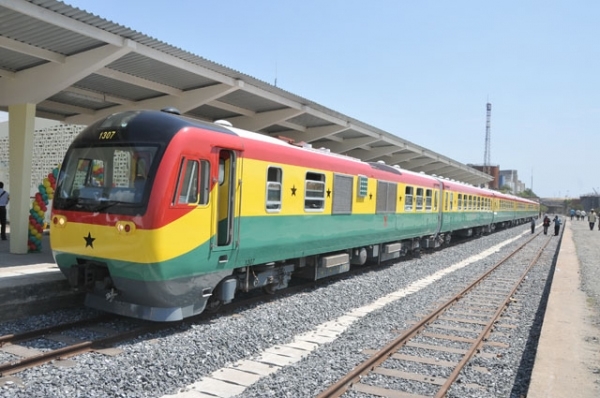
The Minority in Parliament has accused the government of scaling back its commitment to Ghana’s railway sector, warning that critical projects risk being abandoned despite heavy investments in recent years.
At a press briefing , the Ranking Member on the Roads and Transport Committee, Kennedy Nyarko Osei, said the sector seen as vital to the country’s long-term transport and logistics framework is facing setbacks due to limited funding and stalled execution of projects.
The caucus pointed out that no allocation was made for railway development in 2025, while only GH¢73 million has been set aside in 2026, a figure it considers inadequate given the scale of ongoing works.
According to the Minority, Ghana made considerable progress between 2017 and 2024, with investments exceeding $1.1 billion that supported infrastructure development and the acquisition of rolling stock to revive rail transport. However, it said several of these projects have slowed or come to a halt under the current administration.
Among the projects cited is the Tema–Mpakadan railway line, which is nearly complete but yet to begin operations. The Kojokrom–Manso line and the Manso–Huni Valley stretch were also highlighted as projects that have seen little to no progress in recent months.
Mr Osei noted that without supporting infrastructure such as entry and exit terminals, the full benefits of these projects cannot be realised, warning that neglecting these components could undermine the value of investments already made.
The Minority also criticised the discontinuation of the Adum–Kaase railway project, describing it as a lost opportunity to reduce congestion and improve transport efficiency in the Kumasi area.
It cautioned that delays, funding gaps, and incomplete projects are slowing Ghana’s rail modernisation drive and could lead to higher costs if existing infrastructure deteriorates over time.
The minority in parliament is urging government to recommit to the sector by increasing funding, completing ongoing works, and ensuring that investments translate into tangible economic gains. It also pledged to sustain its oversight role to promote a more efficient and integrated transport system.
Source: Classfmonline.com/Zita Okwang


Trending News

Police dismiss viral video on Adaklu drug bust as misleading
07:31
IBAG conference 2026: Sam Jonah urges insurance brokers to adapt to global changes
11:22
Bawumia must distance himself from NPP governance to rebuild trust — Mussa Dankwah
12:19
Minority threatens to block parliament if finance minister skips gold-for-reserve questions
16:19
Ketu North scholarship initiative expands support to over 400 students, attracts major backing
17:17
Prez. John Mahama defends security recruitment process and deny favouritism claims
07:19
Ibrahim Mahama engages Police leadership amid Assault allegation investigation
11:12
O/R: Ghana Police Service arrest suspect in Kadjebi murder case
13:11
Over 2,000km of roads under reconstruction nationwide — Kwame Governs Agbodza
15:04
C/R: 3-year-old killed, 9 injured in bee attack at Agona Swedru suburb
16:59
